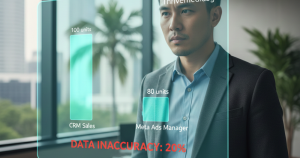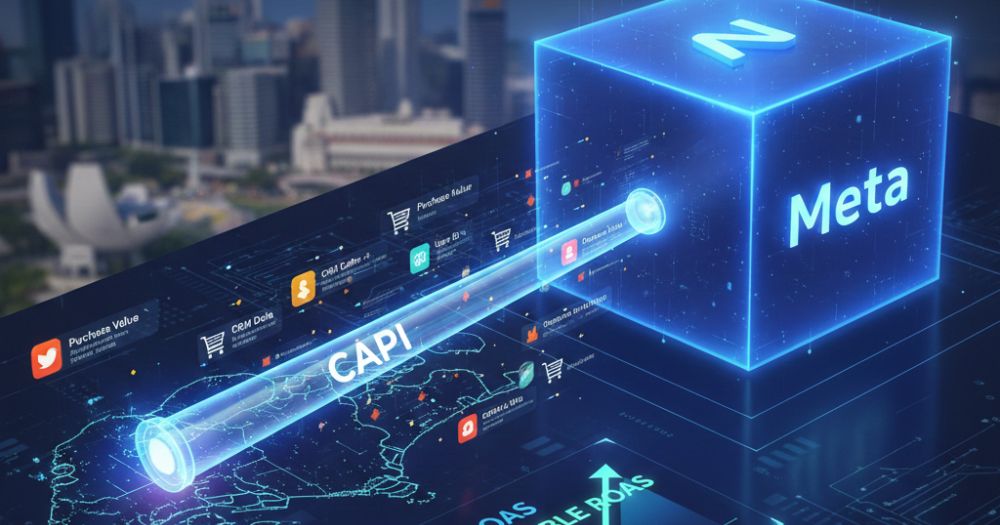
In the fast-paced digital landscape, the phrase “data is the new oil” has never been more relevant, especially for businesses leveraging Meta’s vast ecosystem. After the seismic shifts caused by iOS 14 and increasing browser privacy controls, relying solely on the standard Meta Pixel is like trying to drive a car with a foggy windshield, you’re missing too much of the road. The solution? Using the Conversions API (CAPI) to send deep data back to platforms for better targeting, a process we call Feeding the Meta Machine.
This isn’t about simply tracking website visits, it’s about connecting the dots, from the moment a user clicks your ad in Singapore, to the exact point they become a high-value customer in your backend CRM. For Singaporean businesses aiming for unstoppable Return on Ad Spend (ROAS), mastering CAPI is no longer optional, it is the fundamental infrastructure for profitable scaling in 2026.
we shares analysis, strategies on digital marketing everyday.
This service is not intended for persons residing in the E.U. By clicking subscribe, I agree to receive news updates and promotional material from Thrive Media SG
To understand the power of CAPI, you must first acknowledge the current limitations of the standard Meta Pixel. The Pixel, while foundational, is client-side, meaning it relies on a user’s web browser to report actions.
The introduction of Apple’s App Tracking Transparency (ATT) framework drastically limited the Pixel’s ability to track users across apps and websites. According to a 2022 analysis by Marketing-Interactive (https://marketing-interactive.com/), many Southeast Asian marketers reported a measurable drop in reported conversion volume and a corresponding inflation in their Cost Per Acquisition (CPA) figures because the platforms simply didn’t know which ads were working.
This “data blackout” is why campaigns suffer. Meta’s machine learning algorithm, which is the engine driving your ad success, needs clean, comprehensive data to make smart decisions. When the data is patchy, the algorithm gets “confused,” resulting in:
CAPI bypasses browser restrictions by sending conversion data directly from your server (or CRM) to Meta. This server-side connection provides two critical advantages: Reliability and Depth.
Data Transmission Method | Reliability | Tracking Depth | Data Loss Percentage (Est.) | Primary Constraint |
Meta Pixel (Client-Side) | Low to Medium | Basic (Page View, Initiate Checkout) | 20% – 50% | Browser/Device Privacy Settings (iOS 14) |
CAPI (Server-Side) | High | Deep (CRM data, LTV, Margin) | 0% – 5% | Proper Setup and Implementation |
Hybrid (Pixel + CAPI) | Maximum | Maximum | Near 0% | Maintaining Data Deduplication |
Actionable Insight: Implement a Hybrid setup, using both Pixel and CAPI, for the ultimate data resilience. CAPI ensures you capture events the Pixel misses, and Meta’s system automatically handles deduplication to avoid double counting. This complete picture is essential for truly successful Direct Response campaigns.
Connect with our expert team with proven digital marketing strategies that deliver real results.
Connect with us! →The real power of CAPI isn’t just about recovering lost events, it’s about sending deep data that the Pixel simply cannot track. This deep data dramatically improves ad performance and targeting, moving you beyond basic purchase events.
For many businesses in Singapore, especially in high-ticket industries like property, B2B services, or premium enrichment centres, the final conversion (the sale) happens offline. A form submission online is just a lead, the true conversion is the signed contract or the first payment.
This is where CAPI shines through Offline Conversions. By integrating CAPI with your Customer Relationship Management (CRM) system, you can send back crucial, post-lead events like:
Case Study Snapshot: Singapore Enrichment Centre
A local Singapore-based enrichment centre, Learning Heights, faced challenges attributing their $3,000 yearly enrolment packages back to Meta ads. The initial Pixel data only showed “Lead Form Submission.”
Metric | Before CAPI + Offline Data | After CAPI + Offline Data | Improvement |
Reported ROAS in Ads Manager | 1.8X | 3.5X | 94% |
Cost Per Qualified Lead (CPQL) | $150 (Estimated) | $75 (Actual) | 50% Reduction |
Scaling Confidence | Low (Uncertainty) | High (Data-Driven) | Significant |
By using CAPI to send back the “Enrolled” event with the actual enrolment value, the Meta algorithm was retrained. It quickly learned to target users who not only clicked the ad but were also most likely to complete the full enrolment process, directly improving the centre’s profitability.
This is the Data Decoder in action, as discussed in our related article
CAPI allows you to send Custom Data Parameters with your events. This detailed information makes your Custom Audiences and Lookalike Audiences exponentially more effective.
For example, instead of just sending a “Purchase” event, send:
This hyper-detailed data enables Meta to find new users that behave exactly like your most valuable current customers. This sophistication is the key to moving away from restrictive interest-based targeting and confidently moving towards a successful Broad Targeting Strategy
Your business deserves more. Let ThriveMediaSG help your business Increase Sales through digital marketing.

Getting CAPI right requires a technical strategy that goes beyond clicking a few buttons.
The biggest mistake is double-counting conversions, once from the Pixel and once from CAPI. Meta solves this through Deduplication, which uses a unique event ID for each event sent from both sources.
Actionable: Focus ruthlessly on your Event Matching Quality Score. This score, visible in your Meta Events Manager, tells you how well Meta can link your server-side event to a specific Meta user. High-quality matching requires sending robust customer information (e.g., hashed email address, phone number, first name). The higher your score (aim for 8.0/10 or better), the more effective your CAPI data is, and the better your ads will perform.
Credible Data Point: According to Meta’s own documentation, advertisers who implement CAPI and achieve a good Event Matching Quality Score can see a 13-18% improvement in Cost Per Action (CPA) compared to using the Pixel alone. This data is corroborated by external analyses by leading global digital marketing firms (e.g., HubSpot), reinforcing the necessity of proper implementation.







Our team consists of seasoned digital marketers, bringing years of hands-on expertise driving results for SMEs and enterprises throughout the APAC region.
from first click to final sale—across Meta, Google, TikTok, YouTube, and your CRM so you can see what’s working and what’s not.
Your videos, landing pages, ads, and data are aligned under one strategy no more juggling vendors.
Budgets shift based on real-time performance, not monthly meetings.
Leads and traffic you already have get optimized for higher ROI and less waste.
Clear reports, honest feedback, and no jargon—even when results aren’t perfect.
Digital Marketing isn’t just about running ads—it’s about turning data into visible growth.
While digital adoption is high in Singapore, a surprising number of SMEs and even larger enterprises still operate on a data-scarce ad model. The high cost of advertising in the competitive Singapore market demands immediate correction.
Many Singaporean businesses, especially those reliant on high-CPC (Cost Per Click) industries like insurance, property, and private education, fall into the Tracking Deficit Trap.
Southeast Asian cultural buying behaviour, especially for high-ticket items, often involves a high-touch, human-driven sales process. This creates a data gap.

CAPI and deep data don’t just fix tracking, they fundamentally alter your Creative-Led Growth By knowing which ads drove the highest LTV customers, you gain precise creative intelligence.
Instead of guessing which creative is best, CAPI tells you.
Even with the best intentions, CAPI implementation is often fraught with subtle errors that derail data quality. Understanding these is key to achieving a consistently high Event Matching Quality Score.
The Meta Conversions API (CAPI) is a server-side data pathway that sends crucial marketing and conversion data directly from a business’s server, CRM, or data warehouse to Meta’s advertising platform. Unlike the standard Pixel, which is client-side and relies on a user’s web browser, CAPI is highly reliable because it bypasses browser restrictions, ad blockers, and device-level privacy settings (like iOS 14’s ATT).
Why It Matters and Who It Is For: CAPI matters because it solves the core problem of ad attribution in the modern privacy landscape. Without it, Meta’s algorithm operates on incomplete data, leading to wasted ad spend and poor ROAS. This solution is critical for all digital advertisers, especially e-commerce and high-ticket B2B/B2C businesses in Singapore that require accurate tracking of sales, lead quality, and customer lifetime value (LTV).
CAPI operates on the Server-Side Reporting Framework.
Cause (Problem) | Effect (CAPI Implementation) | Outcome (Business Result) |
iOS 14 blocks client-side Pixel tracking, creating data gaps. | Deploy CAPI to send events directly from the secure server. | Near 100% conversion data capture, stabilizing ad performance. |
Meta optimises for ‘any lead’ because it only sees the initial form submission. | Send ‘deep data’ like LTV and ‘Qualified’ status from the CRM. | Algorithm is retrained to target high-intent, profitable customers. |
High CPCs and competitive bidding in the Singapore market. | Improve Event Matching Quality Score by sending hashed CIPs. | Better audience targeting, resulting in lower Cost Per Qualified Acquisition (CPQA) and higher ROAS. |
Think of your ad account as a vending machine.
Many marketers measure CAPI success purely by the recovery of lost ‘Purchase’ events. The non-obvious, contrarian insight is that the most powerful application of CAPI is sending negative signals. Explicitly pushing an Unqualified_Lead event back to Meta is just as valuable as a purchase. By telling the algorithm which users didn’t work out, you are proactively protecting your budget from similar future users, leading to a profound improvement in Cost Per Profitable Customer.
Frequently Asked Questions for Singapore Marketers
CAPI combats high CPCs in Singapore by sending conversion value and quality back to Meta. This enables the algorithm to optimise for high-value customers, not just cheap clicks. By Feeding the Meta Machine with deep data, your budget is efficiently spent on audiences likely to generate the highest ROAS.
Singaporean marketers should aim for an Event Matching Quality Score of 8.0/10 or higher in Meta’s Events Manager. A high score means Meta can accurately attribute server-side data to users, which is essential for effective targeting and maximizing the return on your ad spend.
The discrepancy is due to device-level privacy changes (like iOS 14’s ATT), which block the Pixel from reporting all conversions. The solution is using CAPI (Conversions API), which sends conversion data directly from your server to Meta, ensuring the machine receives the complete, accurate picture.
Yes, many Singapore SMEs use partner integrations like Shopify's built-in connector or third-party tools such as Zapier or Make.com to implement CAPI. These tools can bridge your CRM or backend system with Meta, providing the deep data needed to properly feed the Meta Machine.
Beyond standard 'Purchase' events, you should send 'deep data' such as Customer Lifetime Value (LTV), profit margin, lead quality scores, and offline lead status updates (e.g., 'Demo Booked'). This deep data allows Meta's algorithm to optimise for profit, not just volume, increasing your ROAS.
Deduplication is the process of preventing Meta from double-counting the same event reported by both the Pixel and CAPI. It is critical because without it, your ROAS reports are inflated, leading to flawed campaign decisions and overspending on ineffective ads. It relies on a unique event ID.
While this article focuses on Meta's CAPI, the server-side concept is mirrored by other platforms, such as Google's Enhanced Conversions. The principle of sending server-side, deep data remains the same across all major ad platforms for better The Data Decoder accuracy.
The biggest trap is sending CAPI events without including Customer Information Parameters (CIPs) like hashed email or phone number. This results in a poor Event Matching Quality Score, rendering the server-side data ineffective for retargeting and lookalike audience creation.
Results can be seen within 7-14 days. This allows Meta’s algorithm enough time to process the richer, cleaner data and adjust its bidding strategy. Improved campaign stability, lower CPA, and a higher reported ROAS are typical positive effects of properly Feeding the Meta Machine.



Building Brands Since 2001
©2026. ThriveMediaSG. All Rights Reserved.