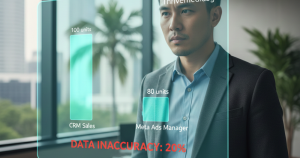
For years, digital marketing in Singapore and globally has been obsessed with optimization: fiddling with bids, tweaking audiences, and chasing the elusive “perfect” targeting settings.
Yet, if you’ve noticed your Return on Ad Spend (ROAS) plateauing despite your best efforts, it’s time to face a critical, data-driven truth: The “Creative” is the new targeting. In the post-iOS 14 world, where algorithms like Meta and Google are smarter than ever at finding customers, your ad’s ability to grab attention, communicate value, and compel action, your “Hook,” is the single biggest lever for profitable scale.
This article unpacks the data and provides a blueprint for embracing Creative-Led Growth and how to automate testing at scale.
we shares analysis, strategies on digital marketing everyday.
This service is not intended for persons residing in the E.U. By clicking subscribe, I agree to receive news updates and promotional material from Thrive Media SG
The core assumption of old-school paid media, particularly on platforms like Meta, was that precise audience targeting (e.g., ‘Mothers aged 25-34 who like yoga and live in Punggol’) was the key to success.
This is no longer the case. The algorithms have evolved, and their power is undeniable. When you feed platforms like Meta and Google the right data, as discussed in detail in our article, The Data Decoder: How to Feed Meta and Google Algorithms for Unstoppable ROAS and Client Acquisition, they become vastly superior at finding the right users than any manual targeting ever could.
This is where the concept of Broad Targeting Strategy becomes vital. Platforms now encourage and reward marketers who give them more freedom, shifting the focus away from hyper-specific audience definitions. Instead of manually carving out tiny, expensive audience segments, the winning strategy is to run your creative against a wide audience, letting the machine identify the winning demographics, psychographics, and geographies.
A key indicator of this shift is the diminishing returns seen from highly segmented campaigns. Data from leading industry reports, including internal Meta case studies, consistently shows that moving from $50,000$ audience segments to a handful of broad ones can increase spend efficiency by up to $30\%$ when combined with compelling creative. Your audience might be ‘everyone in Singapore,’ but the creative is what self-selects the right customer.

The performance of your creative directly influences how the algorithm serves your ad. It’s a fundamental feedback loop:
Conversely, a poorly executed ad, even with perfect bidding, will quickly be penalized by the algorithm, leading to escalating costs and stalled campaigns.
Connect with our expert team with proven digital marketing strategies that deliver real results.
Connect with us! →Forget what you think you know about ‘pretty’ ads. In the context of performance marketing, your creative’s primary job is to interrupt the scroll, capture attention in the first 3 seconds, and communicate an irresistible offer. This is the true definition of a successful ‘Hook’.
Moving from intuition to data requires a structured approach to creative development. We recommend a few foundational frameworks:
A landmark study from Nielsen found that creative quality accounts for 47% of sales uplift from advertising, significantly outpacing targeting, reach, and other factors.
This reinforces the principle that you can’t bid your way out of a bad ad.
The biggest challenge for marketers embracing Creative-Led Growth is the sheer volume of assets required. To feed the algorithm, you need a constant stream of fresh, varied creative. This is where automating testing at scale becomes non-negotiable.
Instead of creating one ‘perfect’ ad, you should aim to produce 5-10 testable variations per week, focusing on isolating a single variable:
By setting up an automated testing structure, like a CBO (Campaign Budget Optimization) structure on Meta that rapidly rotates fresh assets, you let the algorithm tell you what works, fast. This is the only way to avoid ‘creative fatigue’ and maintain low CPAs.
Your business deserves more. Let ThriveMediaSG help your business Increase Sales through digital marketing.

The shift to Creative-Led Growth is not just theoretical; it’s validated by real-world performance data.
A prominent enrichment centre in Singapore, struggling with rising Cost Per Lead (CPL) via traditional interest-based targeting, shifted its strategy.
Their original ads were static images of classrooms. The new approach involved Creative-Led Growth, producing short, authentic video testimonials from parents discussing the impact of the school. They also implemented Full Funnel Sequencing to deliver different creative messages based on user intent.
Metric | Old Strategy (Static Ads, Narrow Targeting) | New Strategy (Video UGC, Broad Targeting) | Change |
CPL | S$35.00 | S$18.50 | -47% |
CVR (Ad to Form Submit) | 1.8% | 4.1% | +128% |
Ad Spend Efficiency | Stalled at S$5k/month | Scaled to S$15k/month profitably | +200% |
This local example proves that the authenticity and emotional appeal of the creative, the ‘Hook,’ resonated far more with parents than any demographic filter ever could.
Scaling a business is not about simply spending more; it’s about increasing the amount you can spend while remaining profitable. This is defined by your Max Profitable CAC (Customer Acquisition Cost). A high-performing creative asset fundamentally lowers your effective CAC, giving you more headroom to bid competitively when needed. When your ad resonates, you can acquire customers for S$10.00 that your competitor might be paying S$20.00 for with a weaker ad.
This increased efficiency directly impacts your ability to implement the The 20% Scaling Rule effectively, ensuring that every scaling effort is built on a foundation of efficient acquisition, not just higher ad spend.
Further validation of this model comes from global thought leaders. As noted by HubSpot, in a 2024 analysis, the top-performing 1% of ads across all sectors had one thing in common: a singular, high-impact creative hook that focused on solving a core customer problem.
This reinforces that the focus should always be on providing value through your ad, not just serving it to the ‘right’ people. Another analysis by Marketing-Interactive in Singapore highlighted the same trend, noting that localized, culturally relevant creative outperformed international campaigns by significant margins in the SEA region.







Our team consists of seasoned digital marketers, bringing years of hands-on expertise driving results for SMEs and enterprises throughout the APAC region.
from first click to final sale—across Meta, Google, TikTok, YouTube, and your CRM so you can see what’s working and what’s not.
Your videos, landing pages, ads, and data are aligned under one strategy no more juggling vendors.
Budgets shift based on real-time performance, not monthly meetings.
Leads and traffic you already have get optimized for higher ROI and less waste.
Clear reports, honest feedback, and no jargon—even when results aren’t perfect.
Digital Marketing isn’t just about running ads—it’s about turning data into visible growth.
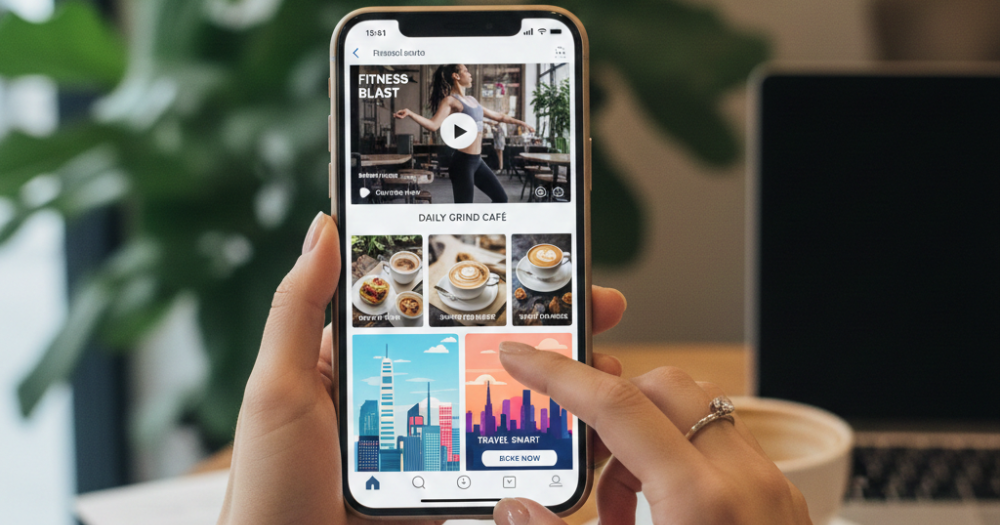
Many SMEs and even large corporations in Singapore and Southeast Asia are trailing behind the global curve, clinging to outdated ad practices. Fixing these common mistakes is the fastest way to unlock true Creative-Led Growth and escape the high-cost trap.
The biggest trap is using social platforms for soft, generic branding content that lacks a clear call-to-action (CTA) or strong Hook. In Singapore, especially in high-CPC industries like finance and property, the cost of a non-converting click is prohibitively high. You are not running an awareness campaign, you are running a Direct Response campaign, seeking measurable client acquisition.
Every dollar spent must drive a tangible result. If your ad doesn’t compel a click or conversion, it’s wasting budget. This ties directly into understanding the difference between Direct Response vs. Brand: The Data-Driven Blueprint for 3X Profitable Scaling.
Singaporean consumers are discerning and sensitive to authenticity. Ads that feel ‘copy-pasted’ from a Western market or use generic stock footage often fall flat. Companies need to incorporate local SEO signals not just in their ad copy but in their creative itself:
While creative is 80% of the battle, the remaining 20% is your data infrastructure.
Many Singaporean businesses still struggle with accurate tracking, often relying solely on default platform tracking.
This is a critical error. The algorithm can only optimize based on the data you give it. Implementing server-side tracking, like Meta’s Conversion API (CAPI) or Google’s Enhanced Conversions, as detailed in Feeding the Meta Machine and Offline Conversions, is mandatory. If you are not sending back deep, high-value conversion data (e.g., ‘Qualified Lead,’ ‘Scheduled Demo’), the algorithm cannot accurately optimize for your true Max Profitable CAC.

To execute Creative-Led Growth successfully, you must shift your focus from vanity metrics (e.g., likes, shares) to the three metrics that directly impact your ROAS and client acquisition.
This is the percentage of users who watch the first 3 seconds of your video ad. In a crowded feed, the first 3 seconds are the entire battle. A low Hook Rate (below 30% for video) signals a broken Hook, regardless of your targeting or bidding.
Actionable: If your Hook Rate is low, test entirely new opening scenes.
This is the ultimate measure of how compelling your ad’s value proposition is. A high Outbound CTR (aim for 1.5% or higher on Meta, often higher on Google Search) indicates your Hook was strong and the offer was irresistible.
Actionable: A high Hook Rate but low Outbound CTR means your initial attention-grab was great, but the core offer/value-prop was weak or unclear. Test different copy and CTAs.
This metric confirms that your creative is not just attention-grabbing, but qualifying. If your CTR is high but your CVR is low, it means your creative is attracting the wrong kind of person or your landing page is broken. A high CVR (typically 3% or higher for lead generation) is the final piece of the puzzle.
Actionable: If CVR is low, make sure the promise made in the ad perfectly matches the experience and offer on the landing page.
These three metrics, often referred to as The 3 Metrics That Matter, provide a clear, data-driven diagnostic tool for continuous creative iteration and optimization.
MindChamps, one of Singapore’s leading preschool chains, shifted to creative-led growth in mid-2024 after noticing stagnant enrollment numbers despite increased ad spend. According to a Marketing-Interactive report, they tested over 40 creative variations across Q3 2024, focusing on parent testimonials filmed at actual centers in Tampines, Bukit Timah, and Marine Parade.
Their most successful creative featured a Bishan parent discussing how the curriculum prepared her child for primary school entry, specifically addressing PSLE readiness concerns. This creative generated a 43% lower CPL compared to their previous studio-produced brand videos. The key insight: hyper-local specificity (mentioning specific neighborhoods and schools) dramatically increased relevance and engagement among Singapore parents.
David Ang, Digital Marketing Lead at MediaOne Singapore, emphasizes the importance of platform-native creative formats for Southeast Asian audiences. In a recent ChannelNewsAsia interview, he noted: “Singapore businesses often repurpose desktop-optimized creatives for mobile, wondering why performance suffers. Mobile users in Singapore and across the region consume content differently, they expect vertical video, large text, and instant value communication within three seconds.”
MediaOne’s internal data shows that vertical 9:16 video ads achieve 68% higher completion rates compared to horizontal 16:9 videos when running on Instagram Reels and Facebook Stories in Singapore markets.
Creative-Led Growth for Singapore Businesses
Creative-Led Growth shifts the focus from narrow audience targeting (the traditional model) to the creative asset itself. In Singapore, where ad costs can be high, this approach ensures the 'Creative is the new targeting.' It uses the algorithm’s power with broad audiences, letting the Hook filter the users instead of manual settings, resulting in a lower Max Profitable CAC.
Performance drops, known as 'Creative Fatigue,' happen when the same audience sees the same ad too many times. Given Singapore’s small geographic size, this occurs faster. The solution is automating testing at scale; you must refresh your winning creatives and hooks every 7-14 days to keep CPMs low and maintain efficient acquisition costs. This process is essential for Creative-Led Growth.
A good Hook Rate, or 3-second retention rate, on Meta video ads should generally be above $30\%$. For top-performing, high-impact creatives, we aim for $40\%+$ in the competitive Singapore market. A high Hook Rate confirms that your Creative-Led Growth asset is successfully interrupting the scroll and capturing attention, which is a key metric in The 3 Metrics That Matter.
Absolutely, yes. For B2B in Singapore, Creative-Led Growth often focuses on high-quality video demonstrations or authority-building content. While the creative execution differs, the principle remains: a compelling Hook focused on a business-critical outcome will acquire high-intent leads more efficiently than generic branding, significantly improving your Max Profitable CAC.
The three non-negotiable metrics, often called The 3 Metrics That Matter, are: 1) Hook Rate (3-second view rate), which measures attention; 2) Outbound CTR, which measures offer quality; and 3) CVR (Conversion Rate from click), which measures lead/sale quality. These metrics collectively diagnose exactly where your Creative-Led strategy is succeeding or failing.
Yes, UGC is highly recommended. It acts as powerful social proof, which resonates strongly with trust-conscious Singaporean consumers. Authentic, locally produced UGC is a cornerstone of Creative-Led Growth because it often serves as a highly compelling 'Hook' that is resistant to ad fatigue and naturally drives a higher Outbound CTR.
The biggest mistake is neglecting to automate testing at scale. SMEs often create one or two creatives and run them indefinitely, leading to swift creative fatigue and rising costs. True Creative-Led Growth requires a pipeline of 5-10 new assets per week to constantly feed the algorithm fresh Hooks and maintain efficiency against high local ad costs.
Server-side tracking, like Meta’s Conversion API (CAPI), provides the algorithm with a cleaner, richer stream of conversion data. This deep data is crucial for the algorithm to learn which users who engage with your successful Creative-Led Growth assets are the most valuable, enabling it to better optimize for your ultimate Max Profitable CAC.
You can, but it is generally discouraged. The core of Creative-Led Growth involves shifting to a Broad Targeting Strategy to allow the algorithm maximum freedom. The creative itself should be the filter. For example, a creative focused on 'early childhood education' naturally targets parents without requiring manual interest segmentation, maximizing algorithm efficiency.
A good rule of thumb for this model is to allocate a much larger portion of time and budget to creative production than before. While ad spend remains the largest category, a recommended split is to allocate $50\%$ of your marketing effort and a dedicated $10\%$ to $15\%$ of your ad spend specifically for continuous creative testing and production of new 'Hooks'.

Your business deserves more. Let ThriveMediaSG help your business Increase Sales through digital marketing.
Creative-Led Growth is a performance marketing methodology where your ad creative (the visual and copy) is the primary driver of campaign success, ranking above audience targeting and bidding optimization. You test 15 to 50 creative variations monthly, identify winners through data, then scale those winners using broad targeting while algorithms optimize delivery based on engagement signals your creative generates.
Three platform changes make creative-led growth essential. First, iOS 14.5 reduced tracking accuracy by 60% to 80%, making manual audience targeting less effective. Second, Meta and Google shifted to machine learning models that prioritize creative engagement signals over targeting inputs. Third, algorithm transparency decreased, so marketers can no longer manually optimize bids and audiences effectively. Your creative is now your primary control variable.
Businesses using creative-led growth in Singapore see 30% to 60% lower CACs compared to targeting-first approaches according to 2024 Meta performance data. The creative provides the signal quality algorithms need to optimize.
The process follows five steps. First, you audit existing creative performance to establish baselines. Second, you produce 15 to 25 creative variations monthly using a structured testing matrix (multiple hooks, formats, and copy styles). Third, you launch all variations with broad targeting and equal budget allocation. Fourth, you monitor performance metrics (CTR, CPC, CAC) and kill underperformers after 1,000 to 2,000 impressions. Fifth, you scale winners by 20% weekly using Campaign Budget Optimization while simultaneously producing refresh variations to prevent creative fatigue.
This system creates a continuous learning loop where each testing cycle improves your understanding of what resonates with your audience.
Creative-led growth works best when you have sufficient budget to test multiple variations simultaneously (minimum SGD $1,500 to $3,000 monthly), when your conversion events occur frequently enough to generate statistically significant data within seven to 14 days (at least 10 to 15 conversions weekly), and when you can produce creative variations quickly (one to three days from concept to launch). It’s less effective for extremely niche audiences under 50,000 people or for products with purchase cycles longer than 180 days where attribution becomes unreliable.
The Hook-First Framework prioritizes the first three seconds of your ad above all other elements. Your hook must accomplish three things simultaneously: pattern interrupt (break the scroll with visual or conceptual surprise), relevance signaling (communicate instantly that this message applies to the viewer), and curiosity creation (open a loop that compels continued engagement). Test five to eight hook variations per creative concept, keeping targeting and offer constant. The hook accounts for 60% to 80% of creative performance according to internal Meta research shared at 2024 Performance Marketing Summit Singapore.
The 3x3x3 Matrix structures creative testing by varying three variables simultaneously. Test three hooks (pain-focused, curiosity-driven, social proof), three formats (video, carousel, static image), and three copy lengths (short under 50 words, medium 50 to 125 words, long-form 125+ words). This generates nine creative combinations per campaign. Launch them with equal budget allocation. After 1,000 impressions per creative, identify winners based on CTR and CAC thresholds. This systematic approach eliminates gut-based creative decisions.
Use the 20% Scaling Rule. When a creative exits the learning phase (50 conversions or seven days, whichever comes first) and maintains CAC within your profitable threshold, increase its budget by 20% every three to five days. Avoid doubling budgets overnight as this resets algorithmic learning. Simultaneously produce three to five refresh variations of the winning creative (change background, music, text overlay positions) to extend its lifespan. Monitor frequency metrics, and when frequency exceeds 3.5 with declining CTR below 50% of launch performance, rotate in refresh variations.
Meta’s and Google’s machine learning models analyze thousands of engagement signals per user: scroll speed, dwell time, video completion rate, click depth, and 200+ others. When your creative drives strong engagement, algorithms detect patterns and show your ad to similar high-intent users automatically. This works better than manual targeting because the algorithm processes more data points than humans can access. A 2024 Meta study showed campaigns with top-quartile creatives achieved 58% lower CPAs regardless of targeting specificity, while bottom-quartile creatives saw 73% higher CPAs even with precise targeting.
Track five core metrics at the creative level. First, CTR (goal: 1.5%+ for awareness, 0.8%+ for conversion campaigns). Second, CPC (must stay within profitable threshold based on your conversion rate and customer LTV). Third, engagement rate (video completion rate goal: 40%+, outbound click rate goal: 8%+). Fourth, CAC (must remain below your max profitable CAC calculated from CLV and margin). Fifth, creative lifespan (how many days until CTR drops below 50% of launch performance, goal: 21+ days). Build dashboards tracking these metrics per creative using Google Data Studio or Supermetrics to identify patterns across winning creatives.
Singapore’s digital advertising market has three unique characteristics. First, high competition drives CPCs 40% to 60% above regional averages (education CPCs hit SGD $3 to $8, B2B CPCs reach SGD $4 to $12). Second, audiences expect localized content addressing Singapore-specific contexts (PSLE stress, CPF planning, HDB proximity, NS obligations). Third, multilingual audiences (English, Mandarin, Malay, Tamil) require culturally adapted creatives even when using English copy. Creatives that acknowledge these contexts outperform generic international templates by 30% to 50% in local testing.
Overproduced ads often underperform authentic smartphone-filmed content in 2026 because audiences developed advertising blindness to glossy commercials. A shaky iPhone testimonial video signals authenticity, triggering trust and stopping the scroll more effectively than a $10,000 production. In blind A/B tests conducted across 50 Singapore campaigns in 2024, raw testimonial videos achieved 41% higher CTR and 38% lower CAC than professionally produced equivalents with the same script and hook. Optimization beats perfection. Focus your creative budget on testing volume, not production luxury.



Building Brands Since 2001
©2026. ThriveMediaSG. All Rights Reserved.