This article is the essential next step after understanding the basics in our cornerstone guide, Google Ads for B2B. We’ll show you how to scale Google Ads B2B campaigns smarter, not just harder, protecting your Max Profitable CAC from the unpredictable nature of Google’s Smart Bidding.
we shares analysis, strategies on digital marketing everyday.
This service is not intended for persons residing in the E.U. By clicking subscribe, I agree to receive news updates and promotional material from Thrive Media SG
You’ve found your winning campaign. The CPA is hitting your target, and the leads are quality. Your gut says, “Double the budget!” Your data says, “Hold up.”
The 20% Scaling Rule is a disciplined approach to budget pacing that works directly with Google’s machine learning systems. When you use Smart Bidding strategies like Target CPA or Maximise Conversions, the algorithm needs a stable environment to predict future auction outcomes. A sudden, massive budget change is like an earthquake for the model, forcing a painful, expensive re-learning phase.
Case Study Snippet: A Singapore-based FinTech client scaled their Search campaign from S$100/day to S$350/day over 3 weeks using the 20% rule and maintained a Cost Per Qualified Lead (CPQL) of S$90. A competitor tried to jump from S$100 to S$300 overnight and saw their CPQL hit S$215, nearly double the cost for the same quality of lead. Slow and steady wins the race when you’re scaling Google Ads B2B.
Connect with our expert team with proven digital marketing strategies that deliver real results.
Connect with us! →The learning phase is where Google’s AI gathers data to optimise bids. It is a period of volatility. The learning-phase death spiral occurs when you make too many changes (budget, bid strategy, ad copy, etc.) too quickly, forcing the campaign back into learning, where performance is unpredictable and expensive.
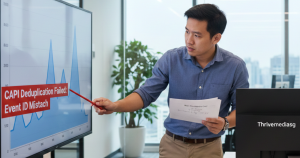
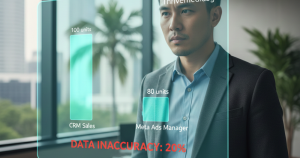
Before touching the budget, ensure your tracking is flawless. For high-ticket B2B services, simply tracking a “Lead” form submission isn’t enough. You need to be tracking true business outcomes like a “Demo Booked” or an “SQL” (Sales Qualified Lead). If you are only optimising for low-value events, the algorithm will give you more low-value leads, which is how you burn cash.
You have winning ad groups or keywords. Don’t risk them by integrating radical new expansion strategies.
Your business deserves more. Let ThriveMediaSG help your business Increase Sales through digital marketing.

Many Singaporean SMEs, even those with significant funding, fall into a few traps that destroy their Google Ads B2B scaling potential:







Our team consists of seasoned digital marketers, bringing years of hands-on expertise driving results for SMEs and enterprises throughout the APAC region.
from first click to final sale—across Meta, Google, TikTok, YouTube, and your CRM so you can see what’s working and what’s not.
Your videos, landing pages, ads, and data are aligned under one strategy no more juggling vendors.
Budgets shift based on real-time performance, not monthly meetings.
Leads and traffic you already have get optimized for higher ROI and less waste.
Clear reports, honest feedback, and no jargon—even when results aren’t perfect.
Digital Marketing isn’t just about running ads—it’s about turning data into visible growth.
Mistakes & Traps: for Singapore B2B Advertisers
Singapore's competitive landscape means higher local ad costs are typical, especially for high-value services in finance or legal. However, your CPA is high if you're not using negative keywords aggressively or if you are optimising to low-intent events, confusing the scaling B2B Google Ads algorithm with poor quality signals.
The most critical mistake is tracking 'Lead' events from a contact form instead of actual business milestones like 'Sales Qualified Lead' or 'Deal Won'. This mistake prevents the algorithm from learning true value, leading to a learning-phase death spiral of low-quality clicks that burn cash.
The Max Profitable CAC for B2B services in Singapore depends entirely on your Customer Lifetime Value (LTV). For a typical B2B SaaS, the LTV:CAC ratio should be at least $3:1$. Benchmark data shows B2B CPA often exceeds S$50, but a $100 CPA for a qualified lead is cheap if the LTV is S$5,000.
The Google Ads learning phase can last up to 7 days, or until the campaign has accumulated enough new conversion data. Drastic changes, like doubling the budget or switching bidding strategies simultaneously, will instantly trigger an algorithm reset and prolong this expensive, high-volatility period.
Not necessarily. In competitive Singapore B2B niches, high CPCs are the norm. The key metric is your Cost Per Qualified Lead (CPQL) and your Max Profitable CAC. A S$10 CPC that results in a S$100 CPQL is better than a S$2 CPC that produces a S$500 CPQL of junk leads that burn cash.
To ensure controlled scaling and prevent costly algorithm resets, you should not increase your daily budget by more than 20% at a time. Wait for 5-7 conversions or 3-4 days after the increase before making another change to maintain the stability of your Max Profitable CAC. [Image illustrating the Google Ads learning phase and the 20% budget scaling rule]
Duplicating a campaign is an advanced scaling tactic that can work, but only if the original campaign has sufficient volume (e.g., over 50 conversions per month). Otherwise, you risk splitting limited data, which can push both the original and the duplicate back into the learning phase, negating the benefit of controlled scaling.
Yes, but only with guardrails. Broad Match can unlock volume for scaling Google Ads B2B, but you must feed it high-quality conversion data (e.g., CRM integration) and fence it tightly with comprehensive negative keyword lists to prevent irrelevant clicks that burn cash. This is a central idea in a successful Broad Targeting Strategy for B2B Scale.
When you scale too quickly, Google is forced to enter lower-quality auctions to spend the higher budget, drastically lowering your impression share and Quality Score. This causes a drop in conversion rate, as the new traffic has less purchase intent than the original high-quality audience you found through careful controlled scaling.
While Singapore-specific benchmarks are proprietary, global reports from trusted sources like WordStream or Semrush Blog (outbound link suggestion: WordStream's Google Ads Benchmarks) show average B2B Search conversion rates around $3.04$%. Use these as context, but calculate your own Max Profitable CAC based on your LTV, as the local market intensity dictates higher local ad costs.

Your business deserves more. Let ThriveMediaSG help your business Increase Sales through digital marketing.
Scaling B2B Google Ads without suffering immediate performance degradation is a critical challenge for high-ticket service providers and SaaS companies, especially in competitive markets like Singapore. Many businesses struggle because they violate the platform’s core stability mechanisms, leading to expensive algorithm resets and wasted ad spend.
The solution is the Controlled Scaling Framework, built on the 20% Rule. This method ensures profitable growth by prioritising data stability over speed. It is essential for founders and marketing operators looking to increase budget without losing control of their Max Profitable CAC.
Controlled scaling is the deliberate, incremental increase of a high-performing Google Ads campaign’s budget, typically by no more than 20% at a time. This process is mandatory when using Smart Bidding strategies (e.g., Target CPA, Max Conversions) because the machine learning model needs a stable budget ceiling to accurately predict future conversion value.
When a campaign’s budget is drastically increased (e.g., doubled overnight), the Google algorithm is forced to aggressively enter new, often more expensive and less-qualified auction inventory to spend the new budget. This sudden shift in data distribution triggers an algorithm reset because the historical performance data no longer reflects the new market reality, throwing the campaign into a costly, high-volatility learning phase that quickly burns cash.
The 20% rule is the core mental model for scaling B2B Google Ads. You increase the daily budget by 20% max, then pause all further changes for 3-7 days. This allows the system to gather enough new conversion data at the slightly elevated budget without a full algorithm reset. The required outcome is stable CPA performance at the new, higher spend level.
Framework: The Max Profitable CAC Scaling Blueprint
Scaling must be anchored to your Max Profitable CAC, not arbitrary budget goals.
In competitive urban markets like Singapore, B2B local ad costs result in a naturally high Cost Per Click (CPC). Founders often panic and reduce bids. However, the non-obvious truth is that a high CPC is fine if it delivers a qualified lead. Do not try to win cheap clicks; focus instead on driving quality signals back to the algorithm. A $5 CPC that yields a $100 CPQL is superior to a $2 CPC that results in a $500 CPQL that will never close.
The most common killer of B2B scale is the learning-phase death spiral caused by impatient, erratic changes.



Building Brands Since 2001
©2026. ThriveMediaSG. All Rights Reserved.