we shares analysis, strategies on digital marketing everyday.
This service is not intended for persons residing in the E.U. By clicking subscribe, I agree to receive news updates and promotional material from Thrive Media SG
Are your Meta (Facebook/Instagram) ads struggling to scale profitably in the competitive Singapore market? The culprit might not be your creative or targeting, but your tracking. In an age of increasing privacy controls, relying solely on the old, browser-based Meta Pixel (client-side tracking) is like trying to drive on the CTE with one eye closed. To achieve truly reliable optimization, especially when calculating your Max Profitable CAC, you must switch to Meta Server-Side Tracking using the Conversions API (CAPI). This authoritative article explains precisely what server-side tracking means in the context of Meta advertising and why it is superior for reliable Feeding the Meta Machine optimization.
For years, the Meta Pixel, a snippet of JavaScript code on your website, has been the standard for tracking customer actions (like “Lead” or “Purchase”). This is known as client-side tracking because the data is collected and sent to Meta directly from the user’s web browser (the “client”).
The problem? The browser is no longer a reliable environment. Updates like Apple’s iOS 14, privacy tools, ad blockers, and even unstable internet connections (a common frustration in parts of Southeast Asia) are all blocking or curtailing the Pixel’s ability to fire. Industry benchmarks, supported by data from reputable sources like the HubSpot Blog, suggest that businesses can lose anywhere from 15% to over 30% of their actual conversion data due to these client-side limitations. If you’re missing one-third of your actual sales data, how can Meta’s algorithm possibly optimize correctly? It can’t, which leads to bloated Customer Acquisition Costs (CAC) and inaccurate insights into your actual Max Profitable CAC.
Server-side tracking, specifically Meta’s Conversions API (CAPI), flips the script. Instead of relying on the user’s browser, the conversion event data is sent directly from your secure web server, CRM, or another internal data source to Meta’s servers. Think of it as a secure, dedicated pipeline, bypassing all the browser-based roadblocks.
Why is this superior?
The entire process dramatically cleans up the data that is Feeding the Meta Machine. This cleaner, more reliable data foundation is the cornerstone of the Max Profitable CAC framework, shifting your focus from simply chasing low-quality leads to optimizing for actual, profitable customers.
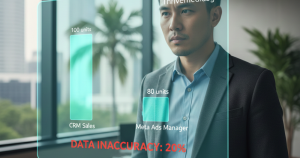
A local Education Technology (EdTech) client in Jurong West was experiencing a common issue: their Meta Ads Manager was reporting 100 leads per week, but their CRM only showed 70 actual leads. This 30% data loss meant the Meta algorithm was misallocating $4,000 in monthly ad spend.
Actionable: We implemented CAPI using a Google Tag Manager Server-Side setup, which allowed us to send hashed PII data directly from their server.
The Outcome: Within four weeks, the reported leads in Ads Manager rose to 95 per week, aligning almost perfectly with their CRM data (95.5% Event Match Quality). More importantly, the algorithm, now ‘smarter,’ began finding better quality leads, increasing their SQL (Sales Qualified Lead) rate by 18%. This reliable tracking allowed us to aggressively scale their budget without exceeding their defined Max Profitable CAC, leading to a 2.5x increase in monthly enrollments.
Tracking Method | Events Reported (per 100 actual) | Event Match Quality | Ad Spend Efficiency |
|---|---|---|---|
Client-Side (Pixel Only) | ~ 70 | Low (Below 60%) | High Waste |
Server-Side (CAPI) | ~ 95 | High (Above 90%) | Optimized & Scalable |
Across Singapore and Southeast Asia, many SMEs, especially those with high-ticket services, are making two critical mistakes:
Actionable: Stop waiting for a free solution to fix this. Whether you choose to use a CAPI Partner Integration or build a Custom API Solution, the investment in reliable tracking will have an immediate, measurable return on ad spend (ROAS).
Connect with our expert team with proven digital marketing strategies that deliver real results.
Connect with us! →If you are serious about optimizing your campaigns and scaling your business, particularly in a data-conscious market like Singapore, implementing Meta Server-Side Tracking is non-negotiable.
Here’s a starting point:
By taking control of your data flow, you move away from the unreliable world of client-side tracking and into a data-driven future where the Meta Machine has all the necessary information to drive down your Customer Acquisition Cost (CAC) and consistently deliver conversions below your Max Profitable CAC threshold.







Our team consists of seasoned digital marketers, bringing years of hands-on expertise driving results for SMEs and enterprises throughout the APAC region.
from first click to final sale, across Meta, Google, TikTok, YouTube, and your CRM so you can see what’s working and what’s not.
Your videos, landing pages, ads, and data are aligned under one strategy no more juggling vendors.
Budgets shift based on real-time performance, not monthly meetings.
Leads and traffic you already have get optimized for higher ROI and less waste.
Clear reports, honest feedback, and no jargon, even when results aren’t perfect.
Digital Marketing isn’t just about running ads. It’s about turning data into visible growth.
Meta Server-Side Tracking (Conversions API) in Singapore
Your tracking is inaccurate primarily because of client-side limitations like ad blockers, Intelligent Tracking Prevention (ITP) in browsers, and Apple's iOS 14 changes. These block the Meta Pixel from firing consistently. The solution is to implement **Meta Server-Side Tracking (Conversions API)** to create a more resilient, direct data pipeline from your server to Meta, bypassing these browser restrictions and recovering lost conversion data.
Server-Side Tracking improves EMQ by allowing you to reliably send more **Advanced PII Parameters** (Personally Identifiable Information, like hashed email, phone number, and name) directly to Meta. When Meta receives this secure, hashed data, it can more accurately match the conversion event back to the user who saw the ad, boosting your EMQ score and Feeding the Meta Machine with better signals.
Deduplication is the process of preventing a single conversion from being counted twice (once by the Pixel, once by CAPI) by sending a unique $\text{event\_id}$ with both events. If your **CAPI Deduplication Failed**, it usually means the same unique $\text{event\_id}$ is either missing, incorrect, or not matching between the browser and server events. This can lead to inflated metrics and an overestimation of your return on ad spend (ROAS).
Yes, absolutely. One of the major advantages of Meta Server-Side Tracking is its ability to transmit events that occur after the initial website visit, such as a physical store purchase, a completed contract from your CRM, or an "**Opportunity Won**" event. This is essential for high-ticket B2B businesses in Singapore where the sales cycle is long and the most valuable conversions are offline.
Reliable Meta Server-Side Tracking provides the algorithm with a cleaner, more complete view of your true conversion rate, resulting in a more predictable and **lower Cost Per Acquisition (CPA)**. This allows you to set and hit a more aggressive, yet sustainable, Max Profitable CAC target, giving you the confidence to scale your ad spend without killing cash flow.
The Meta Pixel is a **client-side** tool that sends data from the user's web browser, making it unreliable due to privacy settings and blockers. **CAPI is a server-side tool** that sends data directly from your server to Meta. CAPI is superior because it ensures higher data integrity, better Event Match Quality, and allows for sending richer, more secure customer data, crucial for optimizing towards your Max Profitable CAC.
While not strictly required, using **Google Tag Manager Server-Side** is one of the most popular and efficient methods, especially for Singapore SMEs, for implementing Meta Server-Side Tracking (CAPI). It acts as a central data hub, allowing you to preprocess and hash data before sending it to Meta, offering a manageable, scalable, and secure way to control your data flow without heavy reliance on developers.
You should aim for an Event Match Quality score of **$8.0$ (Good) or higher**. For businesses serious about scaling, a score of $9.0$ (Excellent) is achievable by ensuring you consistently send high-quality, hashed PII data with every event. A low EMQ directly correlates with inefficient ad spend, as Meta cannot accurately attribute conversions.
The cost varies depending on your chosen method: * **Partner Integration (e.g., Shopify, WooCommerce):** Often the lowest cost and easiest to implement for e-commerce. * **Google Tag Manager Server-Side:** Requires setup, but offers the best balance of control and cost for most SMEs. * **Custom API:** The highest initial cost, reserved for businesses with complex CRM or data requirements.
Regardless of the method, the increased profitability from accurate tracking quickly justifies the initial setup cost.
Yes, you should use both the **Meta Pixel (client-side) and Conversions API (server-side) simultaneously**. This creates a redundancy known as a "**Duo Setup**." The Pixel acts as a fallback for browser events, while CAPI ensures the most crucial events are reliably captured, with a unique $\text{event\_id}$ used for Deduplication to prevent double counting.

Your business deserves more. Let ThriveMediaSG help your business Increase Sales through digital marketing.
Meta Server-Side Tracking, officially known as the Conversions API (CAPI), is a data connection that sends conversion events directly from a business’s server to Meta’s servers. It bypasses the user’s web browser, which is the traditional method used by the Meta Pixel.
CAPI is a response to the “tracking crisis” caused by ad blockers, privacy laws (like GDPR, though less stringent in Singapore), and browser limitations (like Apple’s iOS 14 changes).
It matters because the accuracy of your conversion data dictates the performance of the Meta ad algorithm.
A simple truth: Junk In, Junk Out. If Meta only sees 70% of your real sales, it optimizes your budget for 70% of your potential customers.
CAPI is for founders and marketing operators in Singapore who want to scale their Meta ad spend predictably while maintaining a clear and achievable Max Profitable CAC.
The distinction lies in the data’s transmission point.
Client-Side Tracking (Meta Pixel): Data is sent directly from the user’s web browser (the client) to Meta.
Server-Side Tracking (Conversions API): Data is sent directly from your secure web server or Customer Relationship Management (CRM) system to Meta.
The most robust setup for CAPI follows a Dual Signal Model. This framework uses both the Meta Pixel and CAPI, ensuring maximum data capture while preventing double-counting.
This process ensures that the most valuable data points (the PII match) are used for attribution, resulting in a higher Event Match Quality (EMQ) score, which should consistently be above 8.0 for B2B services in Singapore.
Max Profitable CAC (Customer Acquisition Cost) is a cornerstone metric that defines the maximum dollar amount you can spend to acquire a customer before your profit margins vanish.
When tracking is poor, your reported CPA in Ads Manager is lower than your actual CPA.
Contrarian Insight: Many Singapore SMEs mistakenly focus on maximizing their ROAS (Return on Ad Spend) percentage. Instead, focus on maximizing the volume of conversions that land below your Max Profitable CAC threshold. CAPI provides the data clarity to shift your bidding strategy from “efficient ROAS” to “maximum volume at max profit.”
If you have CAPI, but your EMQ is low, the immediate fix is to implement Advanced PII Parameters.
Instead of sending basic parameters, the server should send hashed versions of:
This secure, first-party data is the most critical factor in achieving the high EMQ required for true algorithmic optimization, effectively giving your ad campaigns a superior data signal compared to your competitors who are still relying on a weak Pixel signal.



Building Brands Since 2001
©2026. ThriveMediaSG. All Rights Reserved.