
If you’ve ever sat through a marketing report packed with “reach,” “impressions,” and “engagement” but had no clue how much revenue you actually made, you’re not alone. Many Singapore SMEs are still being sold brand awareness when what they really need is direct response.
The difference? Direct response marketing is designed to trigger immediate, measurable action. Brand marketing builds long-term recognition. Both have their place, but if you’re a growth-focused founder watching your cash flow like a hawk, you need to understand which strategy puts money back in your pocket today, and which one might take months or years to show results.
In this article, we’ll break down the real differences between direct response and brand marketing, why performance-driven founders prioritize CAC and LTV over vanity metrics, and how you can structure your campaigns to generate predictable revenue instead of pretty charts. We’ll also look at local benchmarks, mistakes to avoid, and tactical frameworks you can apply immediately.
we shares analysis, strategies on digital marketing everyday.
This service is not intended for persons residing in the E.U. By clicking subscribe, I agree to receive news updates and promotional material from Thrive Media SG
Direct response marketing is any campaign designed to generate an immediate, trackable action. That action could be a form submission, a phone call, a purchase, or a booking. The key word here is “immediate.”
Every direct response ad includes a clear call-to-action (CTA) and a way to measure results. You’re not asking people to “remember your brand.” You’re asking them to do something right now, and you’re tracking whether they did it.
Examples include:
According to HubSpot, direct response campaigns typically see conversion rates between 2% and 5% when properly optimized, compared to brand campaigns where conversion intent is often delayed or harder to attribute.
Brand marketing is the art and science of building long-term equity. It’s about creating an emotional connection, establishing trust, and achieving top-of-mind awareness.
Example: A major corporation running a visually stunning commercial during the Singapore Grand Prix. The ad is beautiful, but it doesn’t ask you to do anything immediately.
Brand marketing focuses on building awareness, trust, and emotional connection over time. The goal is to be top-of-mind when a customer is ready to buy, even if that moment is weeks or months away.
Brand campaigns often include:
Brand marketing works, especially for large companies with long sales cycles and big budgets. But for startups and SMEs in Singapore operating on tight margins, it can feel like throwing money into a black hole.
Forbes notes that brand campaigns can take 6 to 12 months before you see measurable lift in sales, and attribution is notoriously difficult. If you’re spending $5,000 a month and can’t tell if it’s working until next quarter, that’s a risky bet.
Connect with our expert team with proven digital marketing strategies that deliver real results.
Connect with us! →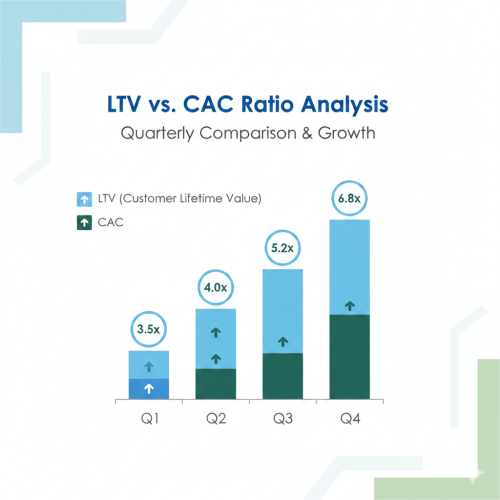
Here’s the reality: founders who survive and scale don’t optimize for likes. They optimize for unit economics.
Two numbers matter more than anything else:
The golden rule? Your LTV should be at least 3x your CAC. If you’re spending $300 to acquire a customer who only generates $400 in lifetime revenue, you’re not building a sustainable business.
Let’s say you run a tutoring center in Singapore. You spend $2,000 on Facebook ads and generate 40 leads. Of those, 10 become paying customers. Your CAC is $200 per customer. If the average customer stays for 12 months and pays $250/month, your LTV is $3,000. That’s a 15:1 LTV:CAC ratio, which is excellent.
Now compare that to a brand campaign where you spend $2,000 on “awareness” but can’t track how many customers came from it. You might feel good about the 50,000 impressions, but if you can’t tie it to revenue, you can’t make data-driven decisions.
This is why performance marketers obsess over CAC and LTV ratios. It’s the difference between guessing and knowing.
Vanity metrics are numbers that look impressive but don’t correlate with revenue. Common culprits include:
Here’s an example. A Singapore-based fitness studio runs an Instagram campaign and gets 10,000 impressions and 500 likes. Their agency reports “great engagement.” But when they check their booking system, they see zero new sign-ups. The campaign didn’t fail because of low engagement. It failed because it wasn’t designed to convert.
According to a 2024 study by Marketing-Interactive, over 60% of Singapore SMEs admit they don’t know how to connect social media metrics to actual sales. That’s a massive blind spot.
Vanity metrics aren’t useless, but they’re leading indicators, not lagging indicators. If your impressions are high but conversions are zero, the problem isn’t awareness. It’s your offer, your landing page, or your targeting.
Performance-driven founders ask one question: “Did this campaign make me more money than I spent?” If the answer is no, the campaign failed, regardless of how many people saw it.
Your business deserves more. Let ThriveMediaSG help your business Increase Sales through digital marketing.

Let’s be clear: brand marketing isn’t evil. It’s just misapplied most of the time.
Brand campaigns make sense when:
For example, if you’re a B2B SaaS company selling enterprise software with a 9-month sales cycle, brand awareness can warm up your prospects so your sales team has an easier conversation. But even then, you should still be running direct response campaigns in parallel to capture high-intent buyers.
The mistake most SMEs make is treating brand as a replacement for direct response, not a complement. You need both, but you should start with direct response until you have predictable revenue.

A high-converting direct response campaign follows a simple structure:
This framework applies whether you’re running Facebook Lead Ads or Google Ads for B2B.
Let’s talk numbers. Based on 2024-2025 data from local campaigns, here’s what “good” looks like for direct response in Singapore:
Facebook/Instagram Ads:
Google Search Ads:
Email Marketing:
These benchmarks vary by industry. For example, preschools and enrichment centers in Singapore often see CPLs between $10–$20 because parents are highly motivated buyers. Meanwhile, B2B SaaS can see CPLs above $100 but LTV in the tens of thousands.
If your numbers are significantly worse than these benchmarks, it’s time to audit your creative strategy, targeting, or landing page experience.







Our team consists of seasoned digital marketers, bringing years of hands-on expertise driving results for SMEs and enterprises throughout the APAC region.
from first click to final sale—across Meta, Google, TikTok, YouTube, and your CRM so you can see what’s working and what’s not.
Your videos, landing pages, ads, and data are aligned under one strategy no more juggling vendors.
Budgets shift based on real-time performance, not monthly meetings.
Leads and traffic you already have get optimized for higher ROI and less waste.
Clear reports, honest feedback, and no jargon—even when results aren’t perfect.
Digital Marketing isn’t just about running ads—it’s about turning data into visible growth.
In 2025, you’re not just competing with other advertisers. You’re competing for algorithmic favor. Both Meta and Google prioritize ads that generate engagement, conversions, and positive user experience.
This is where feeding the Meta machine comes in. If your ad gets clicks but no conversions, the algorithm learns that your ad isn’t valuable and stops showing it. If your ad generates conversions, the algorithm rewards you with lower costs and better placement.
To win with algorithms:
According to data from Semrush, campaigns that properly leverage algorithm learning see 20-40% lower CPAs over time. The algorithm is your friend, but only if you know how to train it.
Despite the clear advantages of direct response, many Singapore businesses still default to brand-first strategies, often because of outdated advice or agency incentives.
Here’s what’s still broken:
Fix these immediately. The market is too competitive to waste budget on broken fundamentals.
Let’s look at a real example. A Singapore-based enrichment center was spending $4,000/month on Facebook ads focused on building brand awareness. They were getting decent engagement, but lead volume was inconsistent, and they had no idea which ads were actually driving enrollments.
We restructured their campaigns around direct response principles:
Step 1: Shifted from “engagement” objective to “lead generation” using Facebook Lead Ads
Step 2: Created three offers: free trial class, downloadable curriculum guide, and parent workshop
Step 3: Built custom audiences based on parents of children aged 4-12 within 5km of their locations
Step 4: Implemented conversion tracking to connect leads to actual enrollments
Step 5: Tested 8 creative variations over 30 days, keeping top performers and killing losers
Results after 90 days:
The key wasn’t spending more. It was spending smarter with a focus on measurable outcomes. This model works for preschools, tuition centers, and any education business in Singapore that’s willing to move away from “brand building” and into performance-driven campaigns.
Forget impressions. Forget likes. If you only track three things, make it these:
These are the 3 metrics that matter. Everything else is noise.

If you’re ready to shift from brand theater to revenue-focused marketing, here’s what to do next:
For more advanced strategies, explore broad targeting and creative-led growth to maximize your reach while maintaining performance.
Direct response marketing prioritizes immediate, measurable actions like form submissions, calls, or purchases, while brand marketing builds long-term awareness and trust. Performance-driven founders in Singapore focus on CAC (Customer Acquisition Cost) and LTV (Lifetime Value) ratios over vanity metrics such as impressions or engagement. A healthy LTV:CAC ratio is at least 3:1, with top-performing campaigns achieving 10:1 or higher.
Key strategies include:
Singapore benchmarks (2025):
Execution framework:
Top questions answered:
Common Mistakes and Traps in Performance Marketing
Yes, but only if you have the budget and systems to track both. Most SMEs should start with direct response until they have proven unit economics. Once your CAC and LTV are healthy, you can layer in brand campaigns to amplify reach. Just make sure you're not cannibalizing your direct response budget for unproven brand experiments.
Because vanity metrics are easier to show and harder to scrutinize. An agency can say "we got you 100,000 impressions" and it sounds impressive, even if you made zero sales. Performance metrics like CAC and ROAS require real accountability. If you want to know more about why agencies push vanity metrics, dig into their reporting methods.
It depends on your customer's intent. Google captures high-intent search traffic, people already looking for your solution. Facebook and Instagram are better for interrupting people with an offer they didn't know they needed. Most successful businesses use both as part of a full-funnel strategy.
Absolutely. In fact, direct response is critical for high-ticket because you can't afford to waste budget on unqualified leads. Use direct response to book calls or demos, then close on the phone or in-person. Even $10k+ services can be sold using direct response strategies.
Not necessarily. CTR tells you if your ad is compelling enough to get attention. But it's only meaningful if those clicks convert. A 5% CTR with a 0% conversion rate is worse than a 1% CTR with a 10% conversion rate. Always pair CTR with conversion data. Learn more about why boosting CTR doesn't always mean boosting revenue.
For e-commerce, aim for 3:1 to 5:1 ROAS. For lead-gen businesses, it depends on your LTV. If your average customer is worth $5,000 and your CAC is $500, you're at a 10:1 return. Context matters, but anything below 2:1 ROAS is usually unsustainable unless you're in an acquisition growth phase.
You're in trouble. This means you're spending more to acquire a customer than they're worth. Fix this by either reducing CAC (better targeting, better creative, better funnel) or increasing LTV (upsells, retention programs, higher pricing). If you can't fix it, your business model might need to change.
If you don't have historical data, estimate based on industry benchmarks or comparable products. Calculate average order value, multiply by estimated purchase frequency, and multiply by estimated customer lifespan. Refine this number as you collect real data. It's better to have a rough estimate than no LTV tracking at all.
Most platforms need 7-14 days to exit the learning phase. If you're seeing zero results after two weeks, something is broken. Either your targeting is off, your creative isn't compelling, or your offer doesn't resonate. Don't wait a month hoping things improve. Test, iterate, and fix fast.
They're essentially the same. "Performance marketing" is just the modern term for direct response. Both focus on measurable, ROI-driven results. The main difference is that performance marketing often includes a broader range of channels (social, search, affiliate, email) under one umbrella.
Track assisted conversions, brand search lift, and survey data. If more people are searching for your brand name on Google, that's a signal. If your direct response campaigns suddenly perform better without changing anything, your brand efforts might be working. But these are soft metrics, measure cautiously.
Use your CRM (HubSpot, Salesforce, Pipedrive) to track customer lifetime value. For CAC, pull ad spend data from Facebook Ads Manager and Google Ads, then divide by the number of customers acquired. If you're not tracking conversions properly, you're probably losing 30% of your ad budget without realizing it.
Test new creative every 7-14 days. Ad fatigue is real, especially on Facebook and Instagram. Even if your ad is performing well, engagement will drop over time as the same people see it repeatedly. Keep a library of 5-10 creative variations so you can rotate them in quickly.
Yes. Service businesses are perfect for direct response because the goal is clear: get someone to book a consultation, request a quote, or schedule a demo. Use lead magnets like free audits or strategy sessions to lower the barrier to entry, then close on the back end.
Yes, in most cases. Platforms like Facebook and Google are better at optimizing bids than humans, especially at scale. Use automated bidding (Target CPA, Target ROAS) once you have at least 50 conversions in your learning phase. Before that, manual bidding can help you control costs while you gather data.



Building Brands Since 2001
©2026. ThriveMediaSG. All Rights Reserved.