we shares analysis, strategies on digital marketing everyday.
This service is not intended for persons residing in the E.U. By clicking subscribe, I agree to receive news updates and promotional material from Thrive Media SG
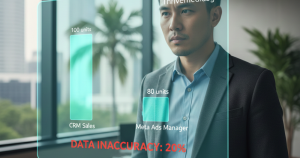
If you’re a digital marketer or business owner in Singapore, you’ve felt the pain: inaccurate Facebook Ad tracking. Privacy updates, ad blockers, and browser limitations have turned the reliable Meta Pixel into a leaky bucket. This tracking decay directly impacts your ability to calculate your Max Profitable CAC and scale campaigns.
This is where the Conversions API (CAPI) steps in. CAPI is Meta’s server-side solution that sends web events directly from your server to Meta’s servers, bypassing common client-side tracking restrictions. Think of it as a direct, unblockable data lifeline. This guide will walk you through the essential setup steps, transforming your data accuracy from an estimate into a reliable foundation for growth.
Before diving into the “how,” let’s underline the “why.” A common issue we see in the Southeast Asia market is ad spend wasted due to poor tracking, leading to algorithms being fed bad data. When the Meta algorithm doesn’t know which users are converting, it can’t optimize your ad delivery effectively.
Case studies have shown that implementing CAPI, especially when coupled with high-quality data like the kind discussed in our article, Achieving 90%+ Event Match Quality: The Advanced PII Parameters You Need to Send via CAPI, can increase reported conversions by 15-25%. For a B2B service in Singapore with a high Customer Acquisition Cost (CAC), that uplift is the difference between stagnation and hitting your growth targets.
Actionable Insight: The primary goal of CAPI is to increase your Event Match Quality (EMQ). High EMQ (ideally 8.0 or above) means Meta can reliably attribute conversions to the correct ad clicks, allowing you to confidently understand and manage your CAC, a key metric we explore in Max Profitable CAC.
The process is broken down into three main methods: Partner Integrations, Google Tag Manager (GTM) Server-Side, and Custom Code. For most Singapore SMEs, the Partner or GTM Server-Side approach offers the best balance of speed and reliability.
Actionable Step: Access your Meta Events Manager and locate the Pixel you want to connect.
Expert Opinion (Singapore Tech Leader): “We advise our clients in Singapore to use the Partner Integration first. It’s the fastest path to getting basic CAPI data flowing. The complexity of a custom build often outweighs the benefit unless you are processing thousands of events daily, a point detailed in The Cost-Benefit Analysis of Using a CAPI Partner Integration vs. Building a Custom API Solution.”
This is the simplest method and highly recommended for e-commerce businesses in Singapore and Southeast Asia.
Actionable Step: Use your platform’s built-in connector.
For more control and the ability to hash sensitive data, GTM Server-Side is the superior option, especially for high-ticket lead generation. Learn more about this advanced method in How to Use Google Tag Manager Server-Side to Send Hashed Data via Conversions API.
Actionable Step: Configure your Server container.
Connect with our expert team with proven digital marketing strategies that deliver real results.
Connect with us! →Local SEO Signal: Businesses in the heart of the CBD, from Shenton Way to Jurong, are losing money daily by relying solely on the old Pixel. This must stop.
After setup, your job isn’t over. You need to ensure the quality of the data flowing through.
The ultimate measure of success is whether your Conversions API Setup Guide resulted in a demonstrable increase in reported conversions and a corresponding decrease in your Cost Per Acquisition (CPA).
By implementing CAPI correctly, you are future-proofing your business, giving Meta’s algorithms the clean, high-fidelity data they need to hit your Max Profitable CAC target consistently.







Our team consists of seasoned digital marketers, bringing years of hands-on expertise driving results for SMEs and enterprises throughout the APAC region.
from first click to final sale, across Meta, Google, TikTok, YouTube, and your CRM so you can see what’s working and what’s not.
Your videos, landing pages, ads, and data are aligned under one strategy no more juggling vendors.
Budgets shift based on real-time performance, not monthly meetings.
Leads and traffic you already have get optimized for higher ROI and less waste.
Clear reports, honest feedback, and no jargon, even when results aren’t perfect.
Digital Marketing isn’t just about running ads. It’s about turning data into visible growth.
Conversions API Setup Guide Mistakes & Traps
The most common issue is improper **deduplication**. Your server and browser events must send the exact same **event\_id** for the same user action. Check the "Test Events" tab in Meta Events Manager to confirm the server event is successfully matched and deduped against the browser event. This is why many ask, *Why is My Facebook Ad Tracking Inaccurate?*.
For most Singapore SMEs, start with a **Partner Integration** (Shopify, Wix, etc.) for speed. If you need to send specific B2B data points (e.g., deal value from a CRM) or need Meta Server Side Tracking for complex funnels, a **GTM Server-Side** setup is the better, more flexible approach.
The risk is **massively inflated conversion numbers**. If your server and pixel events are not properly deduped, Meta counts both, leading to over-reporting of conversions. This makes your calculated CPA and Max Profitable CAC look artificially low, causing you to overspend and believe you're scaling profitably when you aren't.
Sending robust **Customer Information Parameters (CIP)**, such as hashed email ($\text{em}$), phone number ($\text{ph}$), and full name. This PII allows Meta to confidently match the server event to a specific user. Poor EMQ is a common signal that insufficient PII is being collected and hashed correctly.
Not exactly. **GTM Server-Side is a powerful intermediate solution**. It lets you manage server-side events using a user interface (GTM), avoiding the need to write and maintain complex custom API code. It's often the best *Conversions API Setup Guide* recommendation for agencies and developers in the region.

Your business deserves more. Let ThriveMediaSG help your business Increase Sales through digital marketing.
The Meta Conversions API (CAPI) is a server-side solution that allows businesses to send web, app, and offline conversion events directly from their server to Meta’s servers. It functions as a reliable, direct data pipeline, replacing or augmenting the traditional, browser-dependent Meta Pixel. CAPI matters because it circumvents the data loss caused by iOS privacy updates, ad blockers, and cookie restrictions, providing the Meta algorithm with the accurate, high-fidelity conversion data required for effective ad optimization. It is essential for any founder or performance marketing operator serious about scaling their ad spend profitably in the post-iOS14 digital landscape.
CAPI is a tool that sends your business data directly to Meta, contrasting with the Meta Pixel, which sends data from the user’s browser. The data is secured and hashed before transmission. This makes the data transfer more reliable and privacy-friendly.
The core cause is privacy changes (like Apple’s App Tracking Transparency). The effect is that the Meta Pixel loses visibility into a significant portion of user conversions. The outcome of CAPI implementation is up to a 25% increase in reported conversions, which enables the algorithm to calculate a more accurate Max Profitable CAC and spend your budget on the highest-value users.
CAPI works by using a unique Event ID to match a server-side event with its corresponding browser-side Pixel event. This process, known as deduplication, prevents conversions from being counted twice. The server also sends Customer Information Parameters (CIP), such as hashed email or phone number, to achieve a high Event Match Quality (EMQ).
You should implement CAPI immediately if you are spending any money on Meta ads and need reliable conversion tracking. It is non-negotiable for high-cost industries in Singapore, such as real estate or B2B tech, where a single conversion can be worth thousands and data accuracy is paramount.
The most effective tracking strategy is the Data Dual-Channel Model, which maintains both the Meta Pixel (Channel 1, for immediate browser signals) and CAPI (Channel 2, for reliable server signals).
Contrarian Insight: Many marketers overcomplicate CAPI by trying to send every event via the server. A cleaner, more effective approach is to only send high-value conversion events via CAPI, relying on the Pixel for general site traffic. This reduces complexity, server cost, and the chance of a CAPI Deduplication Failed error.



Building Brands Since 2001
©2026. ThriveMediaSG. All Rights Reserved.