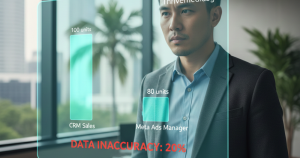
Stop managing people, start managing systems. The “Input-Output” Framework is a closed-loop marketing engine that transforms raw leads into qualified, ready-to-buy appointments automatically. This approach is particularly powerful for Singapore businesses, where ad costs are high and manual follow-ups drain time and resources. Instead of juggling spreadsheets, emails, and reminders, founders can focus on growth while the system handles qualification, nurturing, and scheduling.
According to a 2025 benchmark by HubSpot, businesses that implement automated lead qualification see up to 60% higher conversion rates compared to manual processes. By integrating tools like Zapier, Make.com, and custom AI workflows, companies can remove bottlenecks and optimize every stage of their marketing funnel.
we shares analysis, strategies on digital marketing everyday.
This service is not intended for persons residing in the E.U. By clicking subscribe, I agree to receive news updates and promotional material from Thrive Media SG
The “Input-Output” Framework is a systemized approach to marketing automation where leads enter the system (input), are processed based on logic and rules, and exit as ready-to-buy prospects (output). It functions as a self-sufficient marketing engine, reducing dependency on human intervention while maintaining high efficiency.
Key components include:
For example, a Singapore-based tuition centre using Facebook Lead Ads combined with Google Ads for retargeting can automatically convert inquiries into booked trial classes using this framework, without a VA managing spreadsheets daily (Facebook Lead Ads case study).
Connect with our expert team with proven digital marketing strategies that deliver real results.
Connect with us! →Digital ads in Singapore are expensive. CPC for industries like education, finance, and real estate ranges between S$1.50 to S$6.50 per click (source: Marketing Interactive 2025). Manual follow-ups on these leads often result in wasted spend. An automated “Input-Output” Framework ensures that every dollar invested is optimized.
Hiring virtual assistants or junior marketers is not only costly but introduces latency. According to a study by CloudRock Asia, businesses lose up to 30% of lead potential due to slow response times. AI-driven workflows and automated qualification eliminate human delays while maintaining personalization (Replacing VAs with AI).
Automated systems follow rules consistently. Leads are never lost due to human error, ensuring higher lead-to-customer conversion rates. According to HubSpot, consistent lead follow-ups increase conversion by 50–70%.
Your business deserves more. Let ThriveMediaSG help your business Increase Sales through digital marketing.

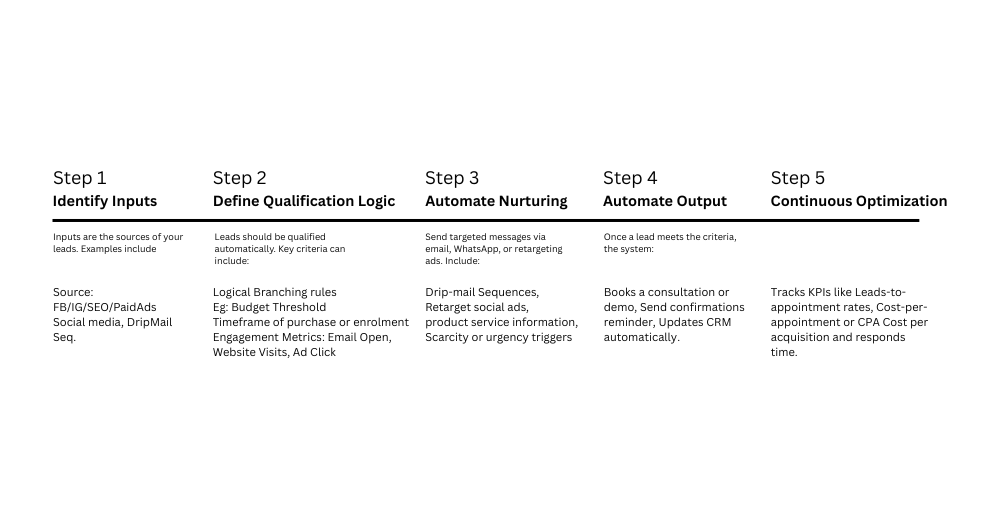
Inputs are the sources of your leads. Examples include:
Leads should be qualified automatically. Key criteria can include:
Using Zapier vs Make.com workflows, businesses can create logical branching rules to automate this step efficiently (Zapier vs. Make.com).
Send targeted messages via email, WhatsApp, or retargeting ads. Include:
A case study by MediaOne Singapore found that nurturing workflows increased trial-class bookings for enrichment centres by 35% within 60 days.
Once a lead meets the criteria, the system:
This reduces dependency on staff and creates a 24/7 lead qualification system (24/7 Lead Qualification).
Track KPIs like lead-to-appointment rate, cost per appointment, and response time. Use analytics to tweak ad targeting, qualification logic, or nurturing flows. Companies that track and optimize these steps systematically see 20–50% efficiency improvements.
Metric | Manual Process | Input-Output Framework |
|---|---|---|
Lead Response Time | 2–24 hours | 5 minutes |
Conversion Rate | 10–15% | 25–35% |
Lead Leakage | 30% | <5% |
Cost per Appointment | S$80–120 | S$50–70 |
Example: A preschool in Singapore reduced wasted ad spend by 40% and increased class bookings by 28% after adopting this system, using a combination of AI workflows and automated ad retargeting.
This is the engine room, the section where raw leads are transformed into Qualified Leads (MQLs) and then Sales Qualified Leads (SQLs) without a human touching them. This is the closed-loop marketing engine in action.
Logic Gate (Process Step) | Data-Driven Action | Benchmark Goal |
|---|---|---|
Instant Acknowledgment
| Automated SMS/WhatsApp (SG favorite) and email confirmation. | 100% within 60 seconds of submission. |
Initial Qualification
| Bot-based survey (via messenger or landing page) asking 3-5 key qualifying questions (e.g., budget, timeline, specific service interest). | Capture 80% of required qualification data points. |
Lead Scoring
| Assign points based on answers. (e.g., Budget over S$5,000 = +15 points; Needs service next 30 days = +20 points).
| Any lead scoring over a threshold (e.g., 50 points) is automatically flagged as an SQL.
|
Nurturing & Education | Automated drip campaign with case studies, testimonials, and high-value content relevant to their specific interest. | 30% email open rate, 5% click-through rate. |
This entire sequence is about Systematizing Intuition It takes the best judgment of your top salesperson (“If they say X, they are a good fit”) and encodes it into software logic. This ensures every lead, regardless of the time of day or which team member is “on duty,” receives the same optimal path to conversion.







Our team consists of seasoned digital marketers, bringing years of hands-on expertise driving results for SMEs and enterprises throughout the APAC region.
from first click to final sale—across Meta, Google, TikTok, YouTube, and your CRM so you can see what’s working and what’s not.
Your videos, landing pages, ads, and data are aligned under one strategy no more juggling vendors.
Budgets shift based on real-time performance, not monthly meetings.
Leads and traffic you already have get optimized for higher ROI and less waste.
Clear reports, honest feedback, and no jargon—even when results aren’t perfect.
Digital Marketing isn’t just about running ads—it’s about turning data into visible growth.
Despite the clear benefits of the “Input-Output” Framework, many SMEs and high-growth companies in Singapore and across Southeast Asia (SEA) cling to outdated, manual processes. This is a critical area that needs immediate attention.
The “Input-Output” Framework defines a marketing and sales system that operates autonomously by replacing human-dependent tasks with logical, data-driven automation loops. The core principle is transforming raw leads (Input) into pre-qualified, sales-ready appointments (Output) through a non-human qualification Process. This strategic shift allows business owners to manage system performance metrics rather than individual staff tasks. Effective implementation delivers significant efficiency gains, making it a foundation for business scaling and an essential component of The Exit-Ready Stack
Frequently asked questions
The Input-Output Framework is an automated marketing system where leads (input) are qualified and processed by logic, then converted into ready-to-buy appointments (output). It reduces dependency on daily human supervision and improves lead-to-customer conversion.
High CPC means every lead is costly. Automated systems ensure timely follow-ups, reduce wasted ad spend, and improve conversion, critical for industries like education, finance, and real estate.
Automated systems reduce latency and human errors. Unlike VAs, the framework works 24/7 and scales easily without increasing headcount (Replacing VAs with AI).
Use Facebook and Google Ads for acquisition, retarget leads automatically, and combine with SEO-optimized landing pages for a seamless marketing engine (Discover How Paid Ads Can Skyrocket Your Leads in Singapore).
Weekly monitoring is recommended to check analytics, ensure accuracy, and adjust qualification rules or ad targeting as needed.
Start with lead capture from social ads or Google Ads, automate qualification using AI or workflow tools like Zapier, and set up automatic appointment scheduling. Track KPIs to optimize efficiency.
Yes, small businesses can start with free or low-cost tools like Zapier, Make.com, and AI workflows to automate lead handling. Incrementally add complexity as ROI increases.
Overcomplication, ignoring local market nuances, poor data quality, and neglecting human oversight are frequent errors that reduce effectiveness.
Yes, it can qualify leads based on budget and intent, automating scheduling for high-ticket sales processes (Automation for High-Ticket).
Yes, preschools and enrichment centres using this system have seen 30–50% higher trial bookings and faster lead response times.




Building Brands Since 2001
©2026. ThriveMediaSG. All Rights Reserved.