we shares analysis, strategies on digital marketing everyday.
This service is not intended for persons residing in the E.U. By clicking subscribe, I agree to receive news updates and promotional material from Thrive Media SG
When you’re selling a high-ticket B2B service in Singapore, the sales process doesn’t end with a “Thank You” page click. Far from it. That initial form submission is just the start of a complex, human-involved journey that moves through qualification, discovery calls, proposals, and finally, a signed contract. But here’s the problem: standard web pixels only track the easy, immediate stuff, making your Meta (Facebook/Instagram) ads look like they’re burning cash when they’re actually sourcing your best clients.
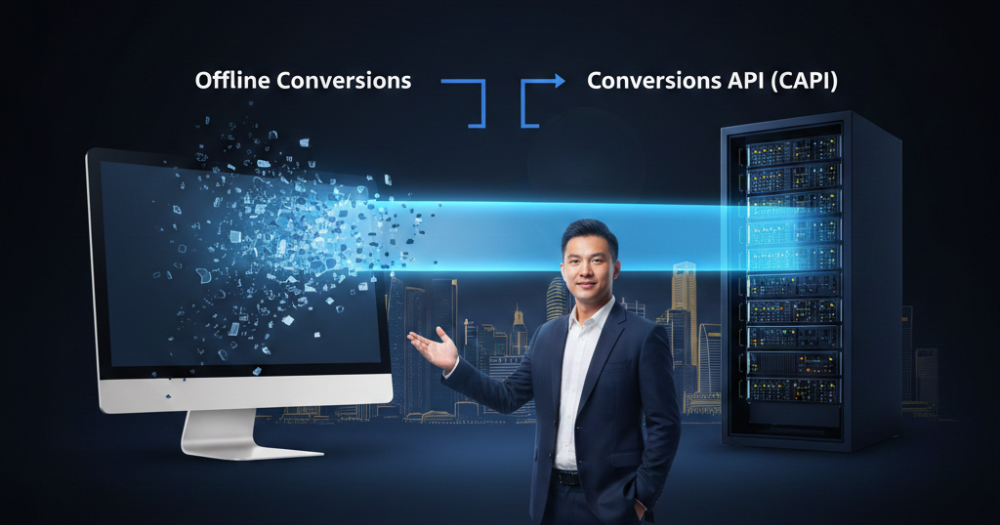
To truly optimize your ad spend and understand your Max Profitable CAC (Customer Acquisition Cost), you need to tell Meta the full story: the final, high-value win. You have two primary methods for reporting these non-web events back to the platform: Offline Conversions and the Conversions API (CAPI). For B2B or high-value services in a sophisticated market like Singapore, one method is drastically superior. Let’s dive deep into why CAPI is the non-negotiable standard for serious advertisers today.
Both methods aim to solve the same core problem: attributing a conversion that happened off your website, typically in a CRM, spreadsheet, or physical transaction, back to the specific Meta ad that drove the initial click or view.
Offline Conversions is the older, simpler method. It involves manually or semi-automatically uploading a file (usually a CSV) from your CRM containing customer data (like email, phone number, name) and the conversion event details (time, value).
How it works:
The Reality for High-Ticket Services: This method is notoriously slow and unreliable for B2B. A major drawback is the inherent data lag and the low Event Match Quality (EMQ) due to limited matching parameters and the delay between the event and the upload. This lag means Meta’s ad algorithm is perpetually training on old, incomplete data, leading to suboptimal bidding and scaling struggles.
The Conversions API is a direct, server-to-server connection between your data source (like your CRM, backend server, or a server-side tag manager like GTM) and Meta. It sends conversion data almost instantly, bypassing browser limitations like ad-blockers and the increasing restriction from ITP (Intelligent Tracking Prevention) on browsers like Safari.
The Critical Differentiator for Singaporean B2B: CAPI allows you to send a far richer set of customer information, known as Advanced PII Parameters. By sending a wider array of hashed data points—including fields like city, state, and ZIP—you drastically improve the accuracy of Meta’s matching process, pushing your Event Match Quality towards the gold standard of 90%+. For a quick guide on achieving this, check out our article on “Achieving 90%+ Event Match Quality: The Advanced PII Parameters You Need to Send via CAPI”.
A key advantage of CAPI is its ability to send crucial server-side data, like the fbc (Facebook Click ID) and fbp (Facebook Browser ID), directly from your backend. This real-time, high-fidelity data is essential for the Meta algorithm to correctly value mid-funnel events like “Qualified Lead” or “Demo Booked,” not just the initial “Lead.” This allows you to scale up more profitably by bidding for a better lead quality, in line with the principles of our Max Profitable CAC framework.
Feature | Offline Conversions (OCL) | Conversions API (CAPI) |
|---|---|---|
Data Transmission | Manual/Scheduled CSV File Upload | Direct, Real-Time Server-to-Server |
Bypasses Browser Issues | No | Yes (Ad Blockers, ITP) |
Event Match Quality (EMQ) | Typically Lower (Often < 60%) | Significantly Higher (Easily 80%+) |
Data Lag | Hours to Days | Seconds |
Data Richness | Limited PII Parameters | Advanced PII Parameters (City, External ID, etc.) |
Use Case for B2B SG | Historical reporting; Not for optimization | Real-Time optimization & scaling |
Connect with our expert team with proven digital marketing strategies that deliver real results.
Connect with us! →For high-ticket B2B services in Singapore, especially those operating with a higher Customer Lifetime Value (LTV), your ad strategy hinges on accurate, timely feedback.
Case Study Snapshot (Singapore-based Fintech Service):
A Singaporean fintech firm was using a legacy Pixel + OCL setup. Their reported Cost Per Qualified Lead (CPQL) was $120, but the true, spreadsheet-tracked CPQL was $185. After implementing a CAPI setup sending real-time CRM-verified “Qualified Lead” events, Meta’s algorithm received a cleaner signal.
The Actionable Insight: Meta’s algorithm is only as good as the data you feed it. Using CAPI for Meta Server Side Tracking allows the algorithm to learn faster and make smarter bidding decisions, especially in competitive, high-CPC Singapore markets. This precision is what allows you to confidently push toward your Max Profitable CAC without overspending on low-quality leads.
Navigating digital advertising in Southeast Asia requires a keen understanding of the local landscape. Many Singaporean SMEs still fall into a few crucial tracking traps.
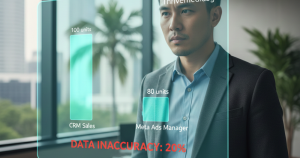
Even today, a significant number of businesses across Singapore and Southeast Asia are relying on a simple Meta Pixel for all their tracking. This is a fundamental mistake that must be fixed immediately. The privacy changes introduced by iOS 14.5 and subsequent browser restrictions mean that the Pixel alone misses anywhere from 15% to 40% of all events. This inaccurate picture inflates your reported CPA and starves your ad campaigns of the vital data needed for scaling. If your ads are failing in Singapore, start by asking: “Why is My Facebook Ad Tracking Inaccurate?”
Actionable: Don’t delay your Conversions API Setup Guide. Consider using a Google Tag Manager Server-Side container to “Send Hashed Data via Conversions API”.
High-authority industry voices continually emphasize the importance of server-side tracking. For example, renowned marketing experts consistently point to server-side solutions as the only path forward for reliable attribution in the post-privacy era. According to data analysis and marketing insights, the move from client-side (Pixel) to server-side (CAPI) is not optional, but a prerequisite for maintaining measurement accuracy.







Our team consists of seasoned digital marketers, bringing years of hands-on expertise driving results for SMEs and enterprises throughout the APAC region.
from first click to final sale, across Meta, Google, TikTok, YouTube, and your CRM so you can see what’s working and what’s not.
Your videos, landing pages, ads, and data are aligned under one strategy no more juggling vendors.
Budgets shift based on real-time performance, not monthly meetings.
Leads and traffic you already have get optimized for higher ROI and less waste.
Clear reports, honest feedback, and no jargon, even when results aren’t perfect.
Digital Marketing isn’t just about running ads. It’s about turning data into visible growth.
Max Profitable CAC
**Max Profitable CAC** is the absolute highest amount you can spend to acquire a new customer while still achieving your desired profit margin. It is crucial for Singaporean B2B firms because it prevents overspending in high-cost ad markets, ensuring every dollar spent contributes positively to the bottom line, thereby supporting sustainable growth.
No, true calculation is impossible. Without a reliable CAPI setup sending real-time, high-value data from your CRM back to Meta, you cannot accurately attribute final sales to your ads. This forces you to make budget and scaling decisions based on poor data, leading to inflated Max Profitable CAC estimates.
The lowest CPL often brings the lowest quality leads, creating a pipeline full of time-wasters. Focusing on **Max Profitable CAC** shifts the priority to lead quality that results in a profitable sale, even if the initial Cost Per Lead (CPL) is higher. This strategy aligns with the goal of more revenue, not just more leads.
Shifting to Max Profitable CAC requires a tighter integration between your marketing and sales teams. Sales must report lead qualification and final sales data back to the marketing system (CRM, CAPI) promptly, enabling timely ad campaign optimization based on the ultimate profitability data.
**Creative** is the primary lever. Highly engaging and relevant creative lowers the Cost Per Click (CPC) and improves conversion rates, which directly reduces your acquisition cost. A great creative approach is fundamental to operating below your calculated Max Profitable CAC.
Simple CPA (Cost Per Acquisition) often tracks a low-value event, like a lead form submission. Max Profitable CAC tracks a final sale and incorporates business variables like Customer Lifetime Value (LTV) and Gross Margin, making it the superior metric for high-ticket services.
Benchmarks vary by industry, but successful high-ticket services often aim for a **CAC-to-LTV ratio of $1:3$ or better**. In Singapore, where ad costs are generally higher, knowing your precise Max Profitable CAC prevents you from relying on generic, often unattainable, industry figures.
Privacy updates degrade the accuracy of client-side tracking (Pixel), causing a significant **under-reporting of conversions**. This makes your reported CAC look artificially high, causing founders to prematurely cut successful campaigns. Implementing a CAPI solution mitigates this data loss.
CAPI itself doesn't lower the cost, but it provides the **data accuracy required for the algorithm to bid more efficiently**. By feeding Meta better signals, the algorithm finds more profitable customers, allowing you to sustain a higher ad spend while keeping your effective Max Profitable CAC stable.
Yes, absolutely. Your **Max Profitable CAC for cold traffic will naturally be higher** because you are acquiring a new customer from scratch. Retargeting, which focuses on warmer audiences, should have a lower, more aggressive Max Profitable CAC target because the conversion cost is typically lower.

Your business deserves more. Let ThriveMediaSG help your business Increase Sales through digital marketing.
The Conversions API (CAPI) is a Meta (Facebook/Instagram) marketing tool that creates a direct, server-to-server connection between an advertiser’s data source and the Meta platform. It securely bypasses the unreliable browser-based Pixel to send high-fidelity, high-value conversion events.
The primary challenge in modern digital advertising is data loss caused by browser Intelligent Tracking Prevention (ITP) and the rise of ad-blockers. These client-side restrictions prevent the traditional Meta Pixel from reliably tracking up to 40% of customer actions. This data loss leads to inaccurate reporting, inflated Max Profitable CAC figures, and ultimately, an under-optimized ad budget. CAPI solves this by transmitting data server-side, making it immune to these browser limitations.
Offline Conversions (OCL) relies on manual or scheduled uploads of CSV files containing customer data. This method is characterized by significant data lag and relies on a limited number of matching parameters. The result is low Event Match Quality (EMQ), often below 60%.
In contrast, CAPI enables real-time data transmission of conversion events, such as a “Proposal Signed” or “Tour Booked” event for high-ticket services like a preschool in Singapore. More importantly, CAPI allows for the inclusion of Advanced PII Parameters (e.g., date of birth, city, country) which, when hashed, drastically increase EMQ to 90%+. This high-quality data is the engine that drives Meta’s machine learning, allowing the algorithm to find more of your ideal, profitable customers faster.
The Conversions API operates on a predictable Cause-Effect-Outcome framework that optimizes ad spend:
The switch is not optional; it is a current necessity. Any business in Singapore spending over S$5,000 per month on Meta ads, particularly those with a complex, multi-step sales cycle, must transition to CAPI. If your Max Profitable CAC is currently being managed with a legacy Pixel, you are actively losing profitable scaling opportunities due to a data deficit. For Singapore’s high-ticket firms, a custom CAPI integration or a GTM Server-Side setup is the only way to safeguard your attribution and ensure every ad dollar works its hardest.
Many advertisers focus only on sending a “Lead” event. The non-obvious, contrarian insight is that for high-ticket B2B, the focus should be on sending mid-funnel quality signals. Sending events like “Qualified Lead” or “SQL (Sales Qualified Lead)” via CAPI is far more valuable than the initial “Lead” event. This trains the algorithm to optimize for qualification rather than just volume, which is the true path to a lower Max Profitable CAC.



Building Brands Since 2001
©2026. ThriveMediaSG. All Rights Reserved.