Singapore

Feeding the Meta Machine: Using CAPI to Train Meta’s Algorithm for Lower CPA and Higher ROAS

Why serious advertisers stop guessing and start feeding the algorithm
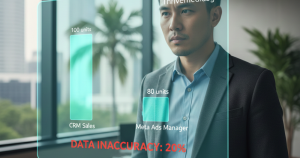
Thrivemediasg team analysing Meta Conversions API data to improve ad performance in Singapore

Most Meta advertisers in Singapore think their problem is creative fatigue, rising CPMs, or competition.
In reality, the real problem is much simpler.

Meta is starving.

Not for budget, not for clicks, but for clean, deep conversion data.

If you only send Meta surface-level signals like page views or basic leads, you are training the algorithm to optimise for the wrong outcomes. This is why many brands see traffic, engagement, and impressions, but struggle to scale profitable results.

This article explains how feeding the Meta machine properly using Conversions API (CAPI) changes targeting accuracy, stabilises CPA, and unlocks scalable performance, especially in high-CPC Singapore markets.

Newsletter Subscription

What “Feeding the Meta Machine” Actually Means

Feeding the Meta machine means sending high-quality, server-side conversion signals back to Meta so its algorithm can:

  • Understand who converts
  • Learn which users generate revenue, not just leads
  • Optimise delivery beyond surface metrics


Meta’s algorithm does not optimise for your business goals by default.

It optimises for the data you send it.

If you send shallow data, you get shallow optimisation.

This concept is deeply connected to the ideas covered in

The Data Decoder: How to Feed Meta and Google Algorithms for Unstoppable ROAS and Client Acquisition
, where algorithm training is treated as a system, not a tactic.

Why Browser Tracking Is No Longer Enough in Singapore

The Death of Pixel-Only Tracking

Browser-based tracking has been slowly breaking for years due to:

  • iOS privacy updates
  • Cookie restrictions
  • Ad blockers
  • Safari and Chrome limitations


In Singapore, where mobile traffic dominates most industries like education, enrichment, property, and professional services, pixel loss can reach
30 to 45 percent of conversions.

This means Meta is optimising blind.

You can read more about how this data loss silently drains budgets in
How Most Businesses Lose 30% of Their Ad Budget Without Knowing It.

Hero Section - Boost Sales
Boost Acquisition With Thrive's Digital Strategy

Connect with our expert team with proven digital marketing strategies that deliver real results.

Connect with us!

What Is Meta Conversions API (CAPI)?

CAPI Explained in Simple Terms

CAPI is a server-to-server connection that sends conversion events directly from your backend or CRM to Meta.

Instead of relying on the browser to fire events, your server tells Meta exactly what happened.

Examples of deep events you can send:

  • Qualified lead
  • Booked appointment
  • Sales consultation attended
  • Invoice issued
  • Payment completed
  • Revenue amount
  • Offline conversions


This is why CAPI plays a critical role in
offline conversion tracking, which is explained further in
Offline Conversions: The Missing Link in Scaling Paid Ads.

Why Deep Data Beats More Data

More events do not mean better optimisation.
Better events do.

Surface Events vs Deep Events

Event Type

Example

Optimisation Quality

Surface

Page view, click

Low

Mid-funnel

Lead form submit

Medium

Deep

Sales call attended

High

Revenue-based

Purchase with value

Very high

Meta’s algorithm performs best when it can differentiate between good leads and bad leads.

This aligns directly with the philosophy in
The 3 Metrics That Matter, where CAC, LTV, and conversion quality outperform vanity metrics.

Lets built the
Perfect Sales Funnel Together

Your business deserves more. Let ThriveMediaSG help your business Increase Sales through digital marketing.

Connect With Our Expert Today
SEOservice-Thrivemedia-1-min

Real-World Singapore Case Study, Education Sector

Preschool Group in Central Singapore

Industry: Early childhood education
Problem: High lead volume, poor enrolment quality
Average CPC: SGD 6 to 12
Monthly ad spend: SGD 18,000

What Changed

Before CAPI:

  • Optimised for lead form submissions
  • No signal for enrolment or school visit
  • CPA looked “good” but revenue lagged


After CAPI:

  • Sent events for school tour attendance
  • Sent enrolment confirmation as offline conversion
  • Passed revenue value back to Meta

Results After 60 Days:

  • Lead volume dropped 22 percent
  • Enrolment rate increased 41 percent
  • Cost per enrolment dropped 33 percent
  • ROAS increased from 1.9x to 3.1x


This is a textbook example of
performance-led optimisation, not brand-level guessing, which is discussed in
Direct Response vs Brand: The Data-Driven Blueprint for 3X Profitable Scaling.

Why Singapore Advertisers Feel CPC Pressure More Than Others

Local Market Realities

Singapore is one of the most competitive ad markets in Southeast Asia.

  • Finance, education, property CPCs can exceed SGD 10 to 25
  • Smaller audience pool
  • High advertiser density
  • Sophisticated buyers who compare before converting

This means bad optimisation is punished faster.


Many SMEs still rely on surface metrics, which is why

Why Paid Ads in Singapore Are Failing Your Small Business (And How to Fix Them) remains painfully relevant.

How CAPI Improves Broad Targeting Performance

Broad targeting only works when Meta knows who to find.

CAPI enables:

  • Faster learning
  • Better lookalike expansion
  • More stable CPAs at scale


This complements strategies outlined in

Broad Targeting Strategy: How to Let the Algorithm Do the Work and
The 20% Scaling Rule, where controlled budget increases rely on signal quality, not micromanagement.

Thrivemediasg-Digital_marketing_agency_Singapore

Trusted by leading startups & enterprises

Why Your Business Matter to ThriveMedia?

Our team consists of seasoned digital marketers, bringing years of hands-on expertise driving results for SMEs and enterprises throughout the APAC region.

✓ We Track Every Step

from first click to final sale—across Meta, Google, TikTok, YouTube, and your CRM so you can see what’s working and what’s not.

✓ We handle everything in-house.

Your videos, landing pages, ads, and data are aligned under one strategy no more juggling vendors.

✓ We adapt instantly.

Budgets shift based on real-time performance, not monthly meetings.

✓ We make your existing data work harder.

Leads and traffic you already have get optimized for higher ROI and less waste.

✓ We keep it real.

Clear reports, honest feedback, and no jargon—even when results aren’t perfect.

Digital Marketing isn’t just about running ads—it’s about turning data into visible growth.

Connect With Our Expert Today

Common CAPI Setup Methods Compared

Integration Options

Method

Best For

Reliability

Google Tag Manager server-side

Technical teams

High

CRM-based integration

High-ticket services

Very high

Zapier or Make

SMEs

Medium

Partner integrations

Shopify, HubSpot

High

Automation-led setups align with ideas from
The Input-Output Framework and
The Automation Audit, where systems replace manual data handling.

What Companies in Singapore Are Still Doing Wrong (And Must Fix Immediately)

Many Singapore businesses still:

  • Optimise for leads instead of sales
  • Treat Meta like a media platform, not a learning system
  • Avoid backend tracking due to “complexity”
  • Rely on agencies that fear transparent attribution


This behaviour leads directly to issues described in

Why Your Agency Might Not Want You to Understand Attribution and
The Hidden Reason Agencies Push Vanity Metrics.

Frequently Asked Questions About Feeding the Meta Machine (Singapore)

Feeding the Meta Machine means sending high-quality conversion data via CAPI so Meta can optimise for real business outcomes like sales and revenue instead of surface metrics like clicks or impressions.

Singapore has high CPCs and limited audience size. CAPI helps Meta identify high-intent users faster, reducing wasted spend and stabilising CPA in competitive industries.

Yes. SMEs can use tools like Zapier, Make, or CRM integrations to send offline conversions without complex development.

No. CAPI complements the pixel. Using both improves event matching and data reliability.

Most advertisers see stabilisation within 2 to 4 weeks once enough conversion data is fed back to Meta.

Send revenue-correlated events such as qualified leads, booked calls, sales, or enrolments.

Yes, when implemented correctly with hashed data and consent-based tracking.

Yes. Broad targeting relies heavily on high-quality signals, which CAPI provides.

Yes. By optimising for deeper events, Meta learns which users convert, not just click.

Costs vary, but most SMEs can implement CAPI for less than one month of wasted ad spend.

External Insights That Reinforce CAPI Strategy

Leading marketing publications consistently reinforce this shift:


These insights validate that CAPI is no longer optional, it is infrastructure.

Core Summary: Key Insights for Feeding the Meta Machine

Direct response marketing prioritizes immediate, measurable actions like form submissions, calls, or purchases, while brand marketing builds long-term awareness and trust. Performance-driven founders in Singapore focus on CAC (Customer Acquisition Cost) and LTV (Lifetime Value) ratios over vanity metrics such as impressions or engagement. A healthy LTV:CAC ratio is at least 3:1, with top-performing campaigns achieving 10:1 or higher.

Key strategies include:

  • Using clear CTAs and single offers in every campaign
  • Tracking conversions through pixels, UTM parameters, and CRM integration
  • Leveraging algorithmic optimization with conversion-focused objectives
  • Testing creative every 7-14 days to avoid ad fatigue
  • Prioritizing direct response until you achieve predictable revenue

Singapore benchmarks (2025):

  • Facebook CPL: $8-$25 (B2C), $30-$80 (B2B)
  • Google CPC: $1.50-$20 depending on industry
  • Landing page conversion rate: 3-8%

Execution framework:

  1. Define your ideal customer and single offer
  2. Launch conversion-optimized campaigns on Facebook or Google
  3. Track CAC, LTV, and ROAS weekly
  4. Kill underperforming ads after 14 days
  5. Scale winners using the 20% rule
  6. Layer in brand campaigns only after direct response is profitable

Top questions answered:

  • Agencies push vanity metrics because they’re easier to report and harder to challenge.
  • Direct response works for both low-ticket and high-ticket services when properly structured.
  • Most SMEs should allocate 70-100% of budget to direct response before investing in brand awareness.
Glen-Chia

A U T H O R

Glen Chia

lets built the funnel together
Provide us with your best contact details - We're sure to drop you a personalised message.
ThrivemediaSG_ContactUS