we shares analysis, strategies on digital marketing everyday.
This service is not intended for persons residing in the E.U. By clicking subscribe, I agree to receive news updates and promotional material from Thrive Media SG
Many businesses in Singapore assume that running a high-velocity creative testing program requires a Hollywood-level budget. This is a common misconception. In reality, CLG is about establishing a high-throughput, low-friction production cycle. The key principle is: small, frequent, and data-informed bets over large, sporadic campaigns.
Forget spending $5,000 on a single, highly polished brand video. A better, data-driven approach for Creative-Led Growth allocates budget across two critical areas: testing and production.
Actionable: Audit your current ad spend. If less than 15% is dedicated to testing new concepts, you are prioritizing diminishing returns on existing campaigns over finding your next winner.
To run CLG efficiently, you need more than just ad accounts. You need a streamlined stack that bridges creative production, deployment, and performance attribution.
External Reference Insight: According to a 2024 report by Marketing-Interactive, businesses that actively integrate creative testing tools with their analytics platforms see a 35% higher return on ad spend (ROAS) compared to those relying solely on platform defaults.
Connect with our expert team with proven digital marketing strategies that deliver real results.
Connect with us! →The biggest bottleneck in Creative-Led Growth is often organizational. A traditional, siloed marketing team (Media Buyer > Designer > Copywriter) is too slow for the required testing velocity.
The most effective structure is a cross-functional Creative Pod that operates autonomously.
This pod model, often seen in high-growth startups globally, enables rapid iteration. When a new ad idea is generated, it should move from concept to deployment within 72 hours. This cadence is what defines true Creative-Led Growth.







Our team consists of seasoned digital marketers, bringing years of hands-on expertise driving results for SMEs and enterprises throughout the APAC region.
from first click to final sale, across Meta, Google, TikTok, YouTube, and your CRM so you can see what’s working and what’s not.
Your videos, landing pages, ads, and data are aligned under one strategy no more juggling vendors.
Budgets shift based on real-time performance, not monthly meetings.
Leads and traffic you already have get optimized for higher ROI and less waste.
Clear reports, honest feedback, and no jargon, even when results aren’t perfect.
Digital Marketing isn’t just about running ads. It’s about turning data into visible growth.
Singapore Creative-Led Growth Strategy
Local audiences on platforms like Meta and TikTok in Singapore often prioritize authenticity and relevance over polish. High-budget videos can trigger 'ad-blindness.' Simple, lo-fi videos feel more native and trustworthy, often leading to better performance in cost-per-acquisition (CPA) compared to expensive, slow-to-produce creatives.
The **Creative Strategist** is arguably the most critical role. They translate performance data, market signals, and competitor trends into new creative ideas that the high-velocity production team executes. They are the data-driven brain, ensuring all creative efforts are measurable. [Image illustrating Creative Strategist as the nexus between Data Analytics, Marketing Strategy, and Creative Production]
Beyond Meta/Google Ads Manager, essential tools include a centralized dashboard (like Google Data Studio or a BI tool) for performance aggregation, and a creative management tool (like Frame.io or Miro) for rapid feedback and iteration. This enables quick analysis of The Only 3 Creative Metrics That Actually Matter.
For high-velocity testing, a **hybrid model** is often best. Use a skilled in-house Creative Strategist for idea generation and feedback, but outsource the high-volume editing and production to specialist teams to ensure you can produce the 8-15 creative variations needed monthly. [Image illustrating the Hybrid Creative Team Model with in-house strategy and outsourced high-velocity production]
Implement a structured ideation process. Use competitor analysis, mine customer reviews (especially negative ones), and repurpose winning angles into new formats (e.g., turn a successful testimonial image into a short 15-second video). The focus should always be on testing a single hypothesis per new creative.
For a viable Creative-Led Growth model, best practice dictates allocating **15-20%** of your total monthly ad spend purely for putting new creative hypotheses into the testing phase. This ensures you have the necessary ad volume to combat Creative Fatigue Detection before your main campaigns burn out.
Absolutely. CLG is budget-agnostic but requires process discipline. Start by committing to one new creative test per week using simple, free tools and a focus on testing the 'Hook' of the ad. This foundational step is covered in The Creative-Led Growth Blueprint (From Theory to Execution).
Creative Fatigue is when your audience has seen your ad too many times, leading to a sharp drop in CTR and a rise in CPA. In hyper-connected Singapore, this can happen quickly (sometimes within 3-4 weeks for a winning ad), making constant creative refreshes essential for consistent growth.
Focus on low-funnel conversion events, not just clicks. Ensure your creative metrics are directly correlated with lower Cost-Per-Acquisition (CPA) and higher Event Match Quality. If an ad has a high CTR but a poor conversion rate, you must identify it as a Killing Fake Wins: How to Identify Losing “Winning” Ads.
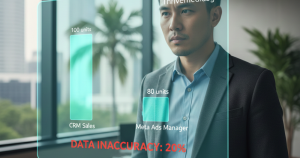
Accurate attribution is difficult due to privacy changes (like iOS 14). If you don't accurately measure the end conversion, you can't tell which creative actually lowered your CAC. To fix this, you must prioritize server-side tracking and high Event Match Quality by using tools like the Conversions API Setup Guide.

Your business deserves more. Let ThriveMediaSG help your business Increase Sales through digital marketing.
Creative-Led Growth (CLG) is a performance-focused approach where creative assets, not just bidding or targeting, are the primary drivers of scalable customer acquisition. It is not an artistic initiative; it is a data-driven process designed to maximize advertising platform efficiency and lower Customer Acquisition Cost (CAC) by consistently feeding algorithms with high-performing creative signals. CLG is essential for modern digital marketers and founders in competitive markets like Singapore who are struggling with rising ad costs and post-iOS 14 targeting limitations.
The CLG framework is a perpetual feedback loop structured around three core pillars: Hypothesis > High-Velocity Production > Data-Driven Testing.
Data-Driven Testing: Creative is deployed into a structured testing environment (e.g., CBO campaigns, Performance Max) and measured against core metrics like Hook Rate and Cost-Per-Acquisition (CPA) to identify winners and inform the next hypothesis.
Cause-Effect-Outcome: In a post-iOS 14 world, the advertising platforms (Meta, Google) have become highly efficient at finding relevant audiences (Cause). However, the only lever the advertiser has to stand out in the feed and provide a strong signal to the algorithm is the ad creative itself (Effect). Therefore, a consistent flow of fresh, high-quality creative is the only way to avoid rapid Creative Fatigue and maintain a profitable Customer Acquisition Cost (Outcome). Contrarian Insight: Running a consistent, low-budget creative testing program often yields better long-term CAC than simply increasing the budget on an aging, high-performing ad.
The financial model for CLG is structured to prevent burnout.
Allocate 20% to Creative Testing: This dedicated portion of the total media spend funds the experiments that will produce the next winner. For a Singaporean SME spending $15,000 monthly on ads, this means $3,000 is non-negotiable for finding the next successful creative.
To move with the required speed, the antiquated linear team structure must be replaced by a focused, cross-functional Creative Pod.
This structure allows an idea to move from data insight to live test within 72 hours, which is the necessary velocity for successful CLG.



Building Brands Since 2001
©2026. ThriveMediaSG. All Rights Reserved.