Scripts beat headcount every time. But in 2025 and beyond, the real question is not whether to automate, it is which engine should run your business systems, Zapier or Make.com?

Founders in Singapore and Southeast Asia are hitting a familiar ceiling. Hiring more staff increases cost but not speed. Outsourcing introduces quality drift. Manual ops quietly eat margins. The businesses scaling fastest are not working harder, they are engineering leverage with automation software.
This deep dive compares Zapier vs. Make.com through a technical, founder-first lens. We break down usability, performance, pricing, scalability, and real SME use cases, so you can choose the right automation platform for growth, not just convenience.
we shares analysis, strategies on digital marketing everyday.
This service is not intended for persons residing in the E.U. By clicking subscribe, I agree to receive news updates and promotional material from Thrive Media SG
ingapore SMEs operate in one of the highest-cost environments in Asia.
Automation flips the equation. One well-built workflow can replace hundreds of manual actions daily. This is why automation-first companies outperform those relying on headcount, as explored in The 2026 Business Automation Blueprint: Engineering Growth Beyond Human Limits
https://thrivemediasg.com/The-2026-Business-Automation-Blueprint:-Engineering-Growth-Beyond-Human-Limits/
Zapier and Make.com are the two dominant workflow engines powering this shift.
Connect with our expert team with proven digital marketing strategies that deliver real results.
Connect with us! →Zapier is a no-code automation tool designed for speed and simplicity. It connects over 6,000 apps and allows users to build linear workflows called Zaps using triggers and actions.
Zapier is best known for:
Make.com, formerly Integromat, is a visual automation platform designed for complex logic. It allows branching, looping, error handling, and data manipulation inside a single scenario.
Make.com is best known for:
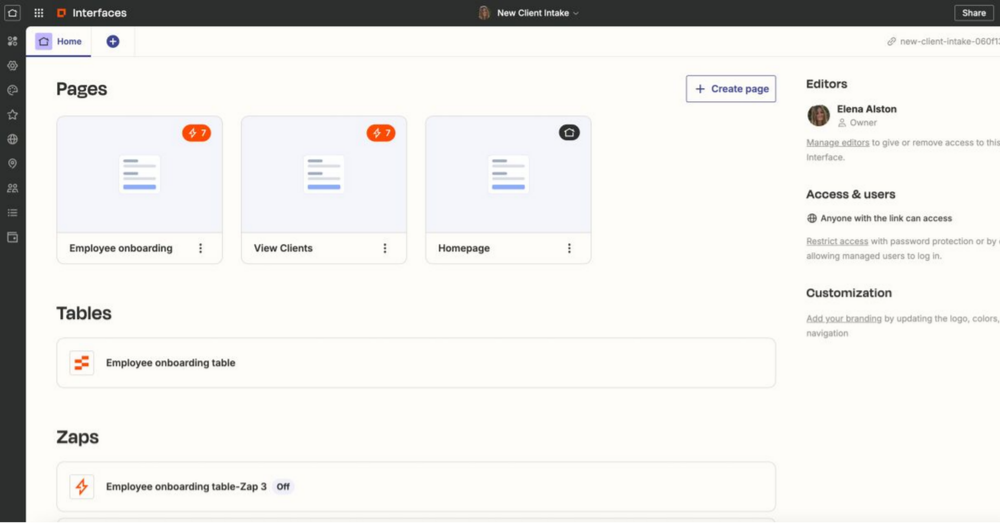
Zapier is designed for founders who want results fast.
For marketing teams running Facebook Lead Ads, Google Ads, or simple CRM updates, Zapier works out of the box. Many Singapore agencies use Zapier to push leads from Meta into CRMs before syncing with WhatsApp.
This simplicity is why Zapier is often used in 24/7 Lead Qualification stacks
https://thrivemediasg.com/24/7-Lead-Qualification/
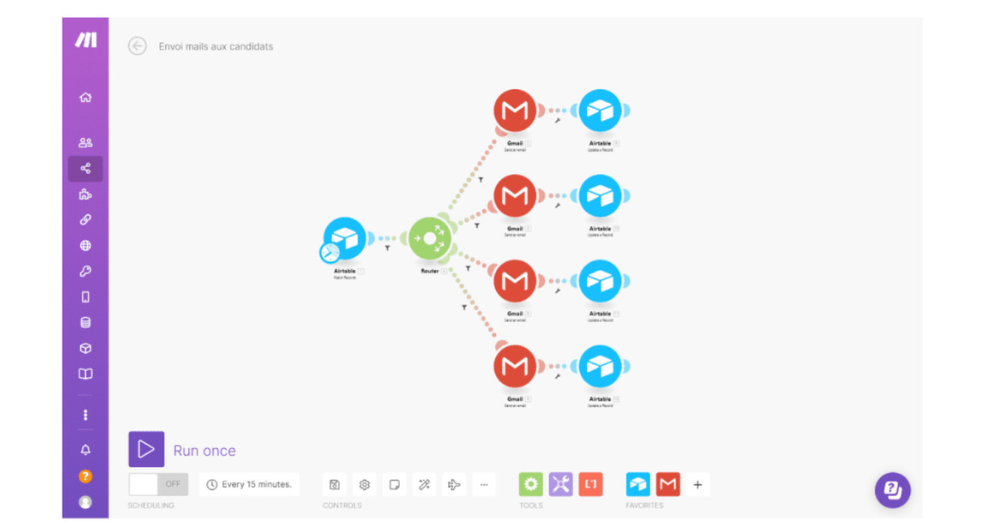
Make.com has a steeper learning curve, but exponentially more power.
For founders replacing ops teams or VAs, Make.com enables system-level thinking, similar to what we outline in The Input-Output Framework
https://thrivemediasg.com/The-“”Input-Output””-Framework/
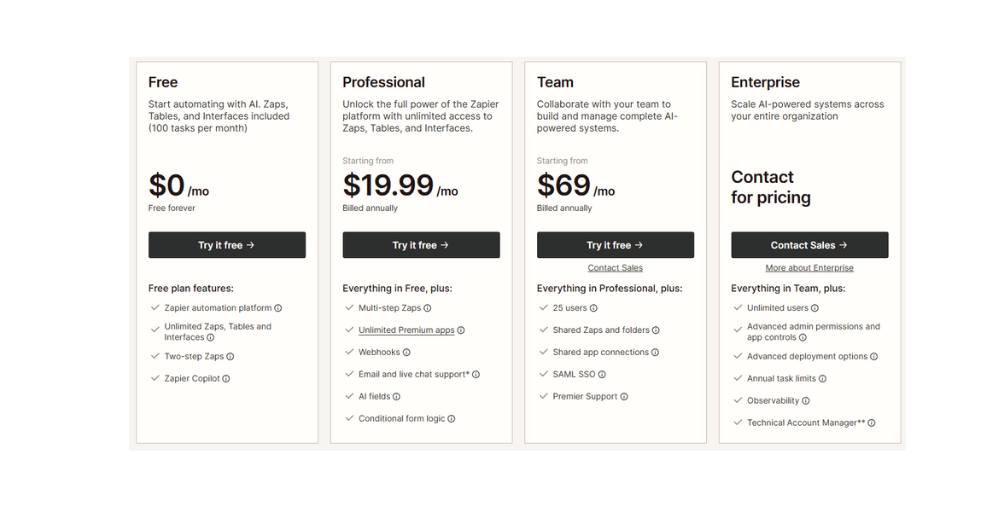
Zapier pricing scales based on tasks.
Zapier works best when volume is low and logic is simple.
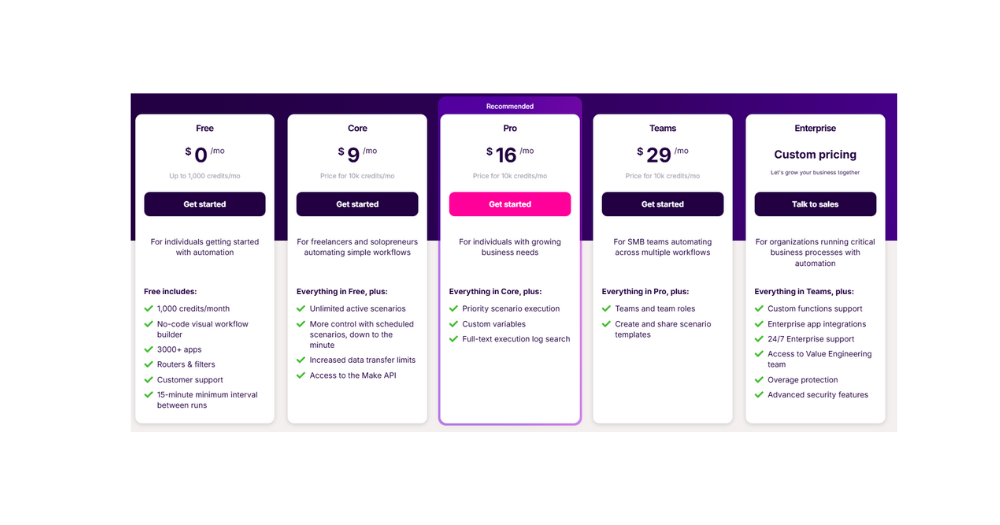
Make.com pricing is based on operations.
For founders tracking automation ROI, Make.com aligns with The Cost of Manual Entry analysis
https://thrivemediasg.com/The-Cost-of-Manual-Entry/
Your business deserves more. Let ThriveMediaSG help your business Increase Sales through digital marketing.

Zapier is ideal for:
Make.com excels when workflows include:
This is why Make.com is often used in Replacing VAs with AI systems
https://thrivemediasg.com/Replacing-VAs-with-AI/
The decision shouldn’t be based on anecdotes, but on hard financial and technical data. Here is a simplified comparison of the crucial metrics.
Feature | Zapier | Make.com | Strategic Implication for Singapore SMEs |
|---|---|---|---|
Workflow Architecture | Linear, A → B → C | Visual, Flowchart (Routers, Iterators) | Make.com handles multi-step, conditional logic better, essential for sophisticated business automation (https://thrivemediasg.com/The-Automation-Audit/). |
App Integrations | 7,000+ (Undisputed leader) | 2,400+ (Fewer, but deeper integration features) | Zapier for breadth; Make.com for depth (more granular actions within one app). |
Pricing Model | Task-based (Expensive at scale) | Operation-based (Cost-effective at scale) | Make.com offers substantial savings (40-70%) for high-volume workflows, critical given high local SEO signals and operating costs in Singapore. |
Ease of Use | Easiest (Build a simple Zap in minutes) | Advanced (Steeper initial curve, but powerful long-term) | Zapier for non-technical teams, but the technical sophistication of Make.com is preferred by operations experts. |
AI Capabilities (2025) | Extensive (Zapier Copilot, AI by Zapier suite, Agents) | Strong via API modules (Requires more technical setup) | Zapier has a lead in user-friendly, built-in AI for tasks like summarising or classifying data. |
Complex Logic | Limited (Uses rigid “Paths,” can be costly) | Excellent (Native Routers, Iterators, Aggregators) | Make.com is better for multi-branching logic, like complex lead scoring systems or multi-system inventory sync. |
Lead Captured (Trigger): The ad form is filled.
Data Enrichment: The lead is pushed to a third-party service to verify the email and find company data.
Conditional Logic: If the lead is from a pre-approved sector in the Central Business District (CBD) and has a valid phone number, it must be instantly routed to the senior sales team. If not, it’s routed to a generic nurturing sequence.
Multi-System Update: Update the CRM (HubSpot/Salesforce), create a task in the Project Management tool (Asana/Jira), and send a customised WhatsApp message (via an API) to the lead.
Zapier in this scenario: This is a 10+ task scenario requiring expensive “Paths” logic. If you run 5,000 leads a month, the task count quickly hits 50,000, pushing you deep into expensive monthly subscriptions. While it’s simple to set up, the recurring costs can negate the return on investment.
Make.com in this scenario: This is handled elegantly with a visual Router that branches the workflow. The Iterators can process multiple data points from the enrichment service simultaneously. The total operation count is significantly lower per lead than the task count in Zapier due to more efficient data handling modules. For a founder focused on Automation for High-Ticket (https://thrivemediasg.com/Automation-for-High-Ticket/), the upfront investment in learning Make.com pays off rapidly in reduced operating expenditure.
The verdict for scaling founders: Zapier’s easy setup is tempting, but Make.com’s structure and cost model offer genuine long-term scalability without incurring the kind of crippling operating costs that can sink an otherwise successful scaling strategy.
A mid-sized tuition centre in Singapore running Facebook Lead Ads faced:
Using Make.com, they automated:
Results:
This aligns with strategies discussed in Automation for High-Ticket
https://thrivemediasg.com/Automation-for-High-Ticket/







Our team consists of seasoned digital marketers, bringing years of hands-on expertise driving results for SMEs and enterprises throughout the APAC region.
from first click to final sale—across Meta, Google, TikTok, YouTube, and your CRM so you can see what’s working and what’s not.
Your videos, landing pages, ads, and data are aligned under one strategy no more juggling vendors.
Budgets shift based on real-time performance, not monthly meetings.
Leads and traffic you already have get optimized for higher ROI and less waste.
Clear reports, honest feedback, and no jargon—even when results aren’t perfect.
Digital Marketing isn’t just about running ads—it’s about turning data into visible growth.
The biggest automation mistake we see with Singapore and regional SMEs is the failure to properly calculate the Cost of Manual Entry (https://thrivemediasg.com/The-Cost-of-Manual-Entry/). Many firms still default to Zapier for everything simply because their marketing agency started them on it, or because of its perceived ease of use. This can lead to a fatal scaling trap.
High-volume industries in Singapore, such as legal consultation, financial products, and enrichment centers (targeting the competitive local education market), face extremely high Google Ads CPCs, often ranging from S$3.00 to over S$8.00 per click. Once a lead converts, the priority is to ensure the Cost Per Task (CPT) for processing that lead is minimal.
If you are generating 5,000 leads per month from your highly competitive paid media campaigns (you can Discover How Paid Ads Can Skyrocket Your Leads in Singapore (https://thrivemediasg.com/discover-how-paid-ads-can-skyrocket-your-leads-in-singapore/)), and each lead requires a 10-step Zap, you are executing 50,000 tasks. On Zapier’s legacy pricing, this is a significant expense. The mindset needs to shift:
Moving from manual labor to automation is a significant digital transformation, and without proper technical oversight, businesses can fall into expensive traps. The shift is not just about the tool; it’s about the technical competency of your team using the tool.
A common mistake in the local service industry, especially for enrichment centres or high-ticket B2B sales, is trying to automate the entire customer experience. Personal touch remains vital in a relationship-driven market.
The Trap: Automating the entire customer onboarding email sequence, resulting in impersonal, templated communication.
The Fix: Use the automation platform (whether Zapier or Make.com) to handle the administrative tasks (data sync, internal notifications, scheduling) but use a human-in-the-loop step for critical, high-value communications. For instance, automate the lead scoring, but set a task for a human in the Singapore sales team to send a personalized follow-up on WhatsApp, which is the preferred local communication channel. This blend of high-speed automation and authentic human interaction is key to success in the Southeast Asian market.
Many new automators neglect to build in proper error handling and monitoring.
The Trap: A tiny change in a form field breaks a Zap or Scenario, and nobody notices until the CRM hasn’t been updated with leads for 48 hours. Dozens of leads are lost.
The Fix: Make.com’s visual structure makes it easier to implement robust error routes. Use a Route to send a copy of any failed operation to a Google Sheet for manual review and simultaneously send an instant Slack/Telegram notification to the Operations Manager. This audit trail is critical. As reported by Zapier in an article, complacency is a killer: routine check-ups are essential to prevent minor breaks from turning into major revenue losses. This oversight can cost thousands of dollars, particularly in high-volume lead environments.
As you scale, you can find yourself paying for Fighting Software Bloat (https://thrivemediasg.com/Fighting-Software-Bloat/) because you are executing redundant steps.
The Trap: Creating an entirely new Zap or Scenario for every minor change or variation, instead of centralizing logic.
The Fix: This is where Make.com’s advanced modules shine. Instead of a linear Zap that runs multiple times for similar inputs, a single, complex Make.com scenario can use Filters, Routers, and Array Manipulations to handle 10 different outcomes inside one scenario, drastically reducing the total number of operations and streamlining maintenance. Think of it as consolidating multiple simple scripts into one elegant master program.
In Southeast Asia, cultural trust-based selling still dominates, but automation enhances, not replaces relationships. Businesses that delay automation will struggle with margin compression and slower deal cycles.
The biggest automation mistake we see with Singapore and regional SMEs is the failure to properly calculate the Cost of Manual Entry (https://thrivemediasg.com/The-Cost-of-Manual-Entry/). Many firms still default to Zapier for everything simply because their marketing agency started them on it, or because of its perceived ease of use. This can lead to a fatal scaling trap.
Zapier is commonly used in digital marketing stacks, but it often masks deeper attribution problems. Many Singapore businesses think their ads work when dashboards lie.
This issue is unpacked in What client dashboards don’t show you
https://thrivemediasg.com/what-client-dashboards-dont-show-you/
Make.com allows:
This is critical when running Facebook Lead Ads or Google Ads in high-CPC markets like Singapore
https://thrivemediasg.com/unlock-more-leads-with-google-ads-for-your-business-thrivemediasg/
Another significant local issue is the reliance on human Virtual Assistants (VAs) for repetitive, data-heavy tasks. While VAs are cost-effective compared to a full-time employee in the Central Business District, they are still a recurring human cost, prone to error, and limited by non-24/7 availability. The immediate fix is simple: start Replacing VAs with AI (https://thrivemediasg.com/Replacing-VAs-with-AI/) and no-code tools for data transfer, basic email classification, and initial lead triage.
The video below offers another perspective on the core differences in architecture, features, and pricing between Zapier and Make.com in a helpful review
The primary difference between Zapier vs. Make.com lies in architectural design and cost-to-scale for sophisticated workflows. Zapier offers unmatched simplicity and app breadth, ideal for beginners, while Make.com provides a visual, highly efficient environment for complex, multi-system automation, proving to be dramatically more cost-effective for high-volume use.
Zapier charges per Task (often a single action), while Make.com charges per Operation. For high-volume, multi-step workflows, Make.com often delivers 40–70% cost savings for Singapore SMEs.
Make.com’s visual architecture allows advanced data processing within fewer modules, reducing paid executions. Zapier’s linear, task-based structure typically consumes more billable actions.
Make.com is superior due to native Routers and Iterators, enabling multi-branch logic and advanced lead qualification workflows.
Both platforms are best for one-way or simple two-way transfers. For real-time bi-directional syncing, a dedicated data synchronisation tool is recommended.
Make.com has a steeper learning curve, but the upfront effort pays off with significantly lower long-term automation costs and greater flexibility.
Companies processing 50,000+ executions per month can typically save 40%–70% by migrating complex workflows to Make.com.
Zapier has a larger global app library, but both platforms integrate well with tools commonly used in Singapore, such as Xero, QuickBooks, and Google Workspace.
Zapier’s AI tools (Copilot and Agents) are more beginner-friendly, allowing non-technical users to build automations using natural language.
Over-automating customer interactions and failing to set up instant error alerts, which can result in lost leads and poor customer experience.
Yes. Singapore SMEs may qualify for schemes like the Productivity Solutions Grant (PSG), which can subsidise qualifying automation costs.




Building Brands Since 2001
©2026. ThriveMediaSG. All Rights Reserved.